Water Damage Restoration in Fort Lauderdale
Storm Damage 911 matches Fort Lauderdale homeowners with vetted, licensed, insured water damage contractors working across Broward County, free and with no obligation. You compare up to two written quotes from local pros and decide.
Water damage after a storm needs action within 24 to 72 hours to stop mold and structural damage. Storm Damage 911 connects you with licensed, insured local water-restoration pros who extract water, dry the structure, and document everything for your records, usually with a same-day assessment.
Water Damage in Fort Lauderdale
Free, no obligation. We match you with up to two licensed, insured local pros so you can compare.
- Licensed pros
- Free, no spam
- One call, not eight
Got it. A vetted local pro will reach out shortly.
Add a few details to help us find the right match faster (optional):
Water Damage after storms in Fort Lauderdale
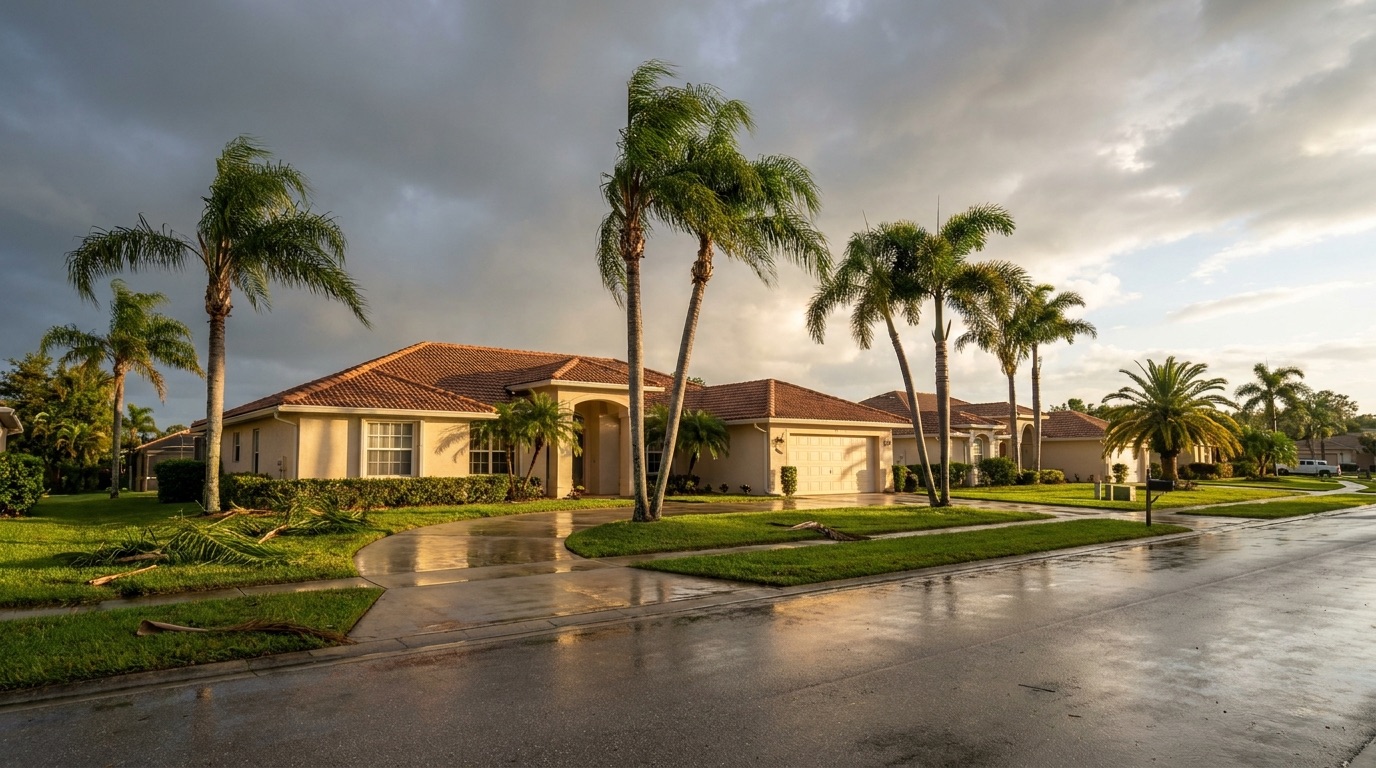
Broward County sits entirely within Florida's High Velocity Hurricane Zone (HVHZ), with design wind speeds of 160-180 mph across the county, reflecting the sustained Category 1-2 hurricane-force winds that struck the county during events like Hurricane Wilma (2005), which caused $1.2 billion in local damage, made roughly 70% of homes and businesses suffer at least minor damage, and rendered 5,111 residences uninhabitable. Storm surge is primarily a coastal and Intracoastal hazard: a direct major-hurricane strike could push 9-12 feet of surge onto the barrier island and Hollywood Lakes area, with inundation typically confined to within 1-2 blocks of the shoreline in weaker storms but extending further inland along canal networks. Inland flooding is an independent and persistent threat driven by Broward's flat topography, high water table, and 59 inches of annual rainfall concentrated in a May-October wet season; king-tide events further compromise drainage during fall months, and the county projects a 2-foot sea level rise by 2060 will substantially increase flood frequency countywide. Hurricane Andrew (1992), Frances and Jeanne (2004), Katrina (2005), and Wilma (2005) all triggered Presidential Disaster Declarations for Broward, and the county has received eight such declarations since 1992.
That is why matching with a pro who actually works in Broward County matters. The water damage specialists in our Fort Lauderdale network are licensed for this trade, insured, and locally rated, and they give you a free, written assessment with no obligation.
Water damage restoration is the process of extracting standing water, drying structural materials, controlling microbial growth, and returning a property to a safe, pre-loss condition. In Florida, the primary threats are hurricane-driven flooding, storm surge, and wind-rain intrusion that saturates walls and flooring across entire floors. In Illinois, heavy rainfall overwhelming aging combined sewer systems and sump pump failures are the most common causes, particularly in Chicago-area basements. Professionals follow the IICRC S500 Standard for Professional Water Damage Restoration, which defines four water damage classes and three contamination categories. Category 1 is clean water from a sanitary source; Category 2 ("gray water") carries biological or chemical contamination; Category 3 ("black water") includes sewage backup, floodwater, and any water left standing long enough for bacterial growth. The category determines the scope of decontamination, the extent of material removal, and the total project cost. Speed is the defining variable: every 24-hour delay narrows the window for in-place drying and widens the scope for demolition and mold remediation.
The processHow water damage restoration in Fort Lauderdale works, step by step
- Emergency Response and Source ControlThe crew arrives within 2-4 hours, stops the water source if still active (shutting supply valves, coordinating with city utilities for sewer backups), and performs a safety walk to identify electrical hazards, structural compromise, and sewage contamination. No equipment is staged until the environment is confirmed safe.
- Moisture Mapping and Damage ClassificationTechnicians use thermal imaging cameras, pin-type moisture meters, and thermo-hygrometers to map wet zones across floors, walls, and cavities. The damage is assigned an IICRC water category (1, 2, or 3) and class (1 through 4 based on evaporation load). This map drives all subsequent decisions and serves as the baseline documentation for insurance and for validating drying progress.
- Bulk Water ExtractionTruck-mounted or portable extractors remove standing water. For carpet and pad, weighted extraction tools are used to pull water from the substrate. Category 2 and 3 jobs require full removal of saturated carpet, pad, and often the first 12-24 inches of drywall (flood cuts) before extraction is complete, since those porous materials cannot be decontaminated in place.
- Controlled Demolition and Content RemovalWet drywall, insulation, baseboards, and irreversibly saturated flooring are removed to eliminate moisture reservoirs and allow airflow into wall cavities. Contents are inventoried, packed out if salvageable, or documented for insurance replacement. In Florida post-hurricane jobs, this often includes removing wind-damaged roof decking and sheathing before interior drying begins.
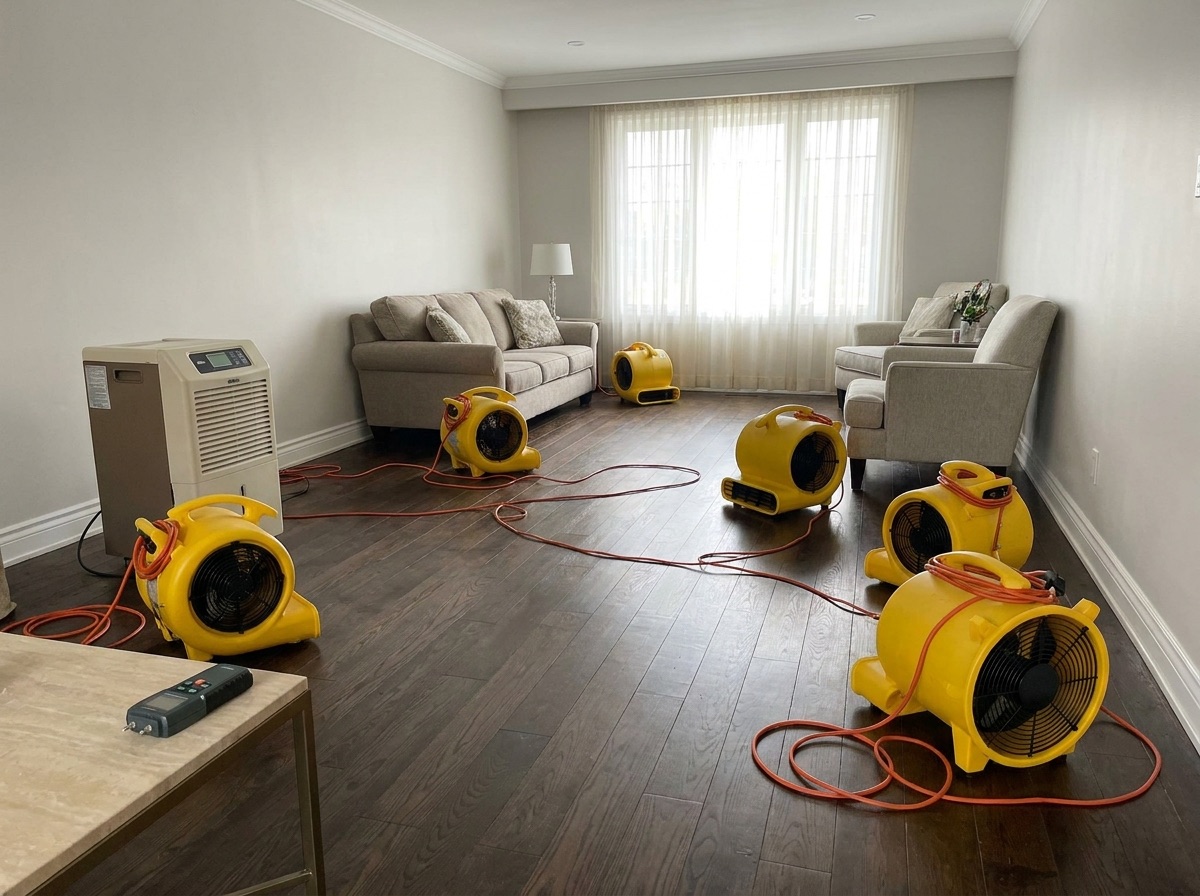
- Structural Drying with Commercial EquipmentLGR (low-grain refrigerant) dehumidifiers rated at 125-250 pints per day and high-velocity air movers are placed per S500 guidelines, typically one air mover per 12-16 linear feet of wall. Desiccant dehumidifiers are used in cooler or extremely wet conditions. Equipment runs continuously; technicians visit daily to log psychrometric readings (temperature, relative humidity, specific humidity, and dew point) and adjust placement.
- Antimicrobial Application and Mold ControlEPA-registered antimicrobial agents are applied to all exposed structural surfaces following extraction. If mold is found or the loss is Category 2 or 3, a Florida-licensed Mold Remediator (or IICRC-certified technician in Illinois) performs containment, HEPA air scrubbing, and surface treatment. Mold assessment and mold remediation must be performed by separate licensed individuals in Florida.
- Drying Validation and Equipment RemovalDrying is declared complete when moisture readings across all structural materials return to established regional reference values (dry standard). Technicians document final readings, remove all equipment, and provide a drying log that includes daily readings, equipment counts, and square footage for the insurance adjuster and the homeowner's records.
- Reconstruction and Final InspectionRestoration of removed materials (drywall, insulation, flooring, trim, painting) is either performed by the same company or by a licensed general contractor. In Florida, structural repairs require appropriate contractor licensing. A final walkthrough confirms that moisture readings are normal, no odor remains, and all repaired areas match pre-loss condition.
How much does water damage restoration cost in Fort Lauderdale?
| Cost factor | How it moves the price |
|---|---|
| Water Contamination Category | Category 1 clean water is the least costly to mitigate and drying typically proceeds with standard equipment. Category 2 gray water (sewage-adjacent, appliance overflow) costs more and requires antimicrobial treatment and material removal. Category 3 black water (sewage backup, floodwater) is the most expensive category, demanding full decontamination protocol, PPE disposal, and removal of all porous structural materials. Total project costs for Category 3 losses can be substantial. |
| Square Footage and Number of Affected Areas | A single-room loss of 200 sq ft is fundamentally different from whole-floor or multi-story flooding. Multi-area losses require more equipment sets running simultaneously and more labor days, multiplying costs non-linearly. |
| Time to Professional Response | Clean water left standing for 24-48 hours escalates to a Category 2 loss as bacterial counts rise. Delays past 48 hours can push a Category 1 job into Category 3 territory. Structural wood begins to rot after 48+ hours of saturation, shifting from a drying job into a demolition and rebuild. The cost difference between a 4-hour and a 48-hour response on the same event can be two to three times. |
- Extent of Required Demolition. Drywall flood cuts, removal of insulation, subfloor tear-out, and cabinet removal each add meaningfully to total cost depending on scope. A Category 3 basement with fully saturated framing can require near-complete gut renovation before restoration begins.
- Mold Remediation Scope. If mold growth is discovered or confirmed, a licensed mold remediator in Florida or a state-registered certified technician in Illinois must perform separate work under containment. Mold remediation projects range from relatively limited cost for isolated surface growth to substantial cost for concealed cavity mold in walls or under flooring.
- Location and Local Labor Rates. South Florida labor and material costs run higher than rural Illinois markets. Miami-Dade and Broward coastal projects can carry meaningful premiums over inland rates. Chicago urban rates are elevated compared to downstate Illinois.
- Equipment Duration. Commercial drying equipment rental is billed per machine per day. A standard residential job might require 8-12 air movers and 2-4 dehumidifiers running for 3-5 days. Jobs with wall cavity drying systems (injection drying) or crawl space tenting add equipment costs. Delays in reaching dry standard extend rental charges.
- Reconstruction Materials and Finishes. Replacement of standard drywall, paint, and vinyl plank flooring costs significantly less than matching custom hardwood, tile, or specialty finishes. Reconstruction adds substantially to total project cost; premium finishes push the upper end considerably higher.
Get your free written estimate
Free, no obligation. We match you with up to two licensed, insured local pros so you can compare.
- Licensed pros
- Free, no spam
- One call, not eight
Got it. A vetted local pro will reach out shortly.
Add a few details to help us find the right match faster (optional):
What are your options after storm water damage?
- Replacement Flooring After Water Loss. Solid hardwood cannot be reinstalled until framing moisture reaches 6-9% (wood equilibrium). Engineered hardwood tolerates slightly higher moisture content. Luxury vinyl plank (LVP) is frequently specified for flood-prone areas because it is waterproof and dimensionally stable. Tile and concrete are the most moisture-resistant choices for basements and below-grade Florida slabs.
- Drywall and Insulation Replacement. Standard 1/2-inch drywall is the default replacement material. Moisture-resistant (MR) or mold-resistant drywall (e.g., Georgia-Pacific DensArmor, USG Sheetrock Mold Tough) is often specified in bathrooms, laundry rooms, and any wall adjacent to plumbing. Spray foam insulation and rigid foam board replace wet fiberglass batt in areas where future moisture intrusion is likely.
- Vapor Barriers and Encapsulation (Crawl Spaces). Crawl space floods often require full encapsulation: a 20-mil reinforced polyethylene vapor barrier over the ground and up the foundation walls, sealed at seams and penetrations, combined with a dedicated crawl space dehumidifier. Cost varies with crawl space size and accessibility.
- Sump Pump Systems (Illinois Basements). After a sewer or groundwater basement flood, a properly sized sump pump with a battery backup system is a standard mitigation upgrade. The combination of a primary submersible pump plus battery backup is available at a range of price points depending on capacity and brand. Water-powered backup pumps are an alternative where code permits.
When to call a pro
- Standing water or visible pooling in any interior area, including basement, crawl space, or under appliances
- Musty or earthy odor that persists after ventilating the space, indicating moisture trapped in walls, under flooring, or in insulation
- Discoloration on ceilings or walls: yellow, brown, or copper-colored staining that may be expanding over time
- Buckling, warping, or soft spots in hardwood floors, laminate, or subfloor
- Peeling paint or wallpaper, blistering drywall, or bubbling on wall surfaces
- Visible mold growth on walls, baseboards, grout lines, or under sinks, particularly within days or weeks following a water event
- Unexplained increases in water bills suggesting an active hidden leak feeding slow moisture buildup
- Swollen door frames or windows that no longer open and close properly due to wood absorbing moisture in structural framing
Is water damage covered by homeowners insurance in Florida?
Water damage restoration costs are frequently covered in whole or in part by homeowners insurance, depending on the cause and policy terms. Standard homeowners policies typically cover sudden and accidental water damage from events such as a burst pipe, appliance failure, or wind-driven rain entering through a storm-created opening. They generally do not cover damage caused by flooding from storm surge, overland water, or rising bodies of water; that coverage requires a separate flood insurance policy, available through FEMA's National Flood Insurance Program (NFIP) or private carriers. In Illinois, sewer and drain backup damage is excluded from standard homeowners policies but can be added as an endorsement, with a coverage limit and a separate deductible that vary by policy. Florida homeowners should be aware that hurricane damage deductibles are percentage-based (commonly 2-5% of the insured dwelling value), which can represent a substantial out-of-pocket obligation before insurance responds. The homeowner is responsible for their deductible regardless of who performs the work. Waiving, absorbing, or rebating a homeowner's deductible as an inducement to hire a contractor is prohibited under Florida law (Section 817.234, Florida Statutes) and constitutes insurance fraud. Filing a claim for damage that did not occur, or inflating a claim beyond actual losses, is also illegal and can result in criminal prosecution. This information is educational only and does not constitute insurance, legal, or claims advice. Consult your insurance carrier and, where appropriate, a licensed public adjuster or attorney to understand your specific coverage.
Get matched with a vetted local pro
Free, no obligation. We match you with up to two licensed, insured local pros so you can compare.
- Licensed pros
- Free, no spam
- One call, not eight
Got it. A vetted local pro will reach out shortly.
Add a few details to help us find the right match faster (optional):
How to choose the right pro
- Verify Florida Mold Remediator license (if mold is present or suspected): check the FL DBPR license lookup at myfloridalicense.com. For Illinois mold work, confirm IICRC or NORMI certification and state registration effective January 2025.
- Confirm IICRC certification for water damage work specifically: the Water Damage Restoration Technician (WRT) credential is the baseline standard; Applied Structural Drying (ASD) certification indicates advanced drying competency.
- Ask for proof of general liability insurance and workers compensation coverage. Florida requires mold remediators to carry at least $1 million in general liability; request the certificate of insurance naming you as additional insured.
- Ask whether they use a moisture mapping protocol on arrival and whether they will provide a written drying log with daily psychrometric readings. A company that cannot describe this process does not perform professional structural drying.
- Confirm availability of 24-hour emergency response. Water damage is time-critical; a company that cannot respond within 2-4 hours adds damage cost.
- Get a written scope of work before any equipment is placed. Be cautious of verbal agreements or contracts that require assignment of insurance benefits (AOB) without your clear understanding of what rights you are signing over.
- Ask specifically about the drying standard they target: what moisture content in wood framing and drywall indicates completed drying, and how they verify it. Vague answers indicate reliance on time-based rather than data-driven drying decisions.
- Check references and reviews for post-hurricane or flood-scale projects specifically, not just plumbing leaks. The organizational and equipment demands of a major water loss are substantially different from a small appliance failure.
What should a water damage restoration contract include?
Reputable water damage restoration companies typically offer a one to two year workmanship warranty on mitigation services, covering deficiencies in drying execution such as residual moisture that was not detected or documented. SERVPRO, as a widely referenced national benchmark, warrants emergency mitigation work for two years and materials for one year. Contractor Connection's network offers a five-year workmanship warranty as a differentiating standard. Warranties do not cover subsequent water events, deferred maintenance, or damage caused by conditions unrelated to the original loss. Replacement materials (drywall, flooring, fixtures) carry manufacturer warranties separate from the contractor's workmanship warranty. Before work begins, ask the company to state its warranty terms in writing within the contract, including what remedies are available if residual moisture or mold is discovered within the warranty period.
Avoid theseHow do I know when water damage restoration is complete?
- Delaying response beyond 24 hours: every hour of delay allows water to penetrate deeper into structural cavities, allows bacterial counts to rise (escalating the contamination category), and reduces the proportion of materials that can be dried in place rather than demolished. Acting within 24 hours consistently produces lower total costs.
- Using consumer fans and dehumidifiers as a substitute for professional equipment: a household box fan moves air but does not generate the velocity, volume, or directional control of commercial air movers, and a residential dehumidifier removes a fraction of the moisture that an LGR commercial unit removes. These tools may create the appearance of drying while wet conditions persist inside wall cavities.
- Discarding damaged materials before documentation: insurance adjusters require photographic and physical evidence of all damaged items and structural materials. Throwing away saturated flooring, drywall, or contents before an adjuster or restoration professional documents them can reduce or void a claim.
- Ignoring hidden moisture in walls, cavities, and under flooring: stopping work after the surface looks and feels dry is one of the most reliable pathways to mold growth within 30-90 days. Moisture meters and thermal imaging are required to confirm drying in cavities and behind tile.
- Hiring unlicensed contractors for mold-affected properties in Florida: any mold remediation performed without a Florida-licensed Mold Remediator is a violation of state law and may void insurance coverage for the remediation work. The assessment and the remediation must also be performed by different licensed individuals under Florida Statutes Chapter 468.
- Signing an Assignment of Benefits (AOB) agreement without understanding it: in Florida, AOBs transfer your insurance claim rights to the contractor. While sometimes legitimate, they have historically been abused and can leave homeowners with limited ability to dispute claim outcomes. Review any AOB with your insurance carrier before signing.
Water Damage in Fort Lauderdale: questions
Do you cover Fort Lauderdale and nearby areas?
Yes. We match water damage requests across Fort Lauderdale and all of Broward County. The pro we connect you with is local and licensed to work in your area.
How fast can a water damage pro reach me in Fort Lauderdale?
Because water damage is time-sensitive, our Fort Lauderdale network crews prioritize it, typically the same day or next day after a storm.
How long does water damage restoration take?
The active structural drying phase typically runs three to five days for a straightforward clean-water loss in a single room. Larger losses, heavily contaminated water, or extensive material removal can extend drying to seven to ten days or more. Reconstruction of removed materials is a separate phase that can add days to several weeks depending on scope and material availability.
Does homeowners insurance cover water damage from a burst pipe?
Sudden and accidental water damage from a burst pipe is covered by most standard homeowners policies. The key qualifiers are 'sudden' and 'accidental.' If the pipe failed due to long-term neglect or the homeowner was aware of the problem and did not address it, the claim may be denied on maintenance exclusion grounds. Coverage typically pays for the resulting water damage to structure and contents, minus your deductible, but does not cover the pipe repair itself. Document the damage thoroughly before any cleanup begins.
Does standard homeowners insurance cover basement flooding from a sewer backup in Illinois?
No. Standard homeowners policies in Illinois explicitly exclude sewer and drain backup losses. However, coverage is available as an endorsement (add-on) to most policies, with a coverage limit and a separate deductible that vary by policy. If you have a basement or live in a neighborhood with combined storm-sanitary sewers, this endorsement is worth evaluating. If a sewer backed up because a general flood condition overwhelmed the system, even sewer backup endorsements typically exclude the loss, and only a separate flood insurance policy would respond.
Does homeowners insurance cover hurricane flooding in Florida?
It depends on the cause. Wind damage and wind-driven rain that enters through a storm-created opening (a breached roof, a broken window) is typically covered by a standard homeowners policy, subject to a hurricane deductible. Storm surge, overland flooding, and rising water require a separate flood insurance policy through FEMA's NFIP or a private flood insurer. Many Florida homeowners discovered after major hurricanes that their homeowners policy covered wind damage but not the water that followed the storm surge. If both wind and flood damage are present, two separate claims with two separate adjusters and two deductibles may apply.
What is the difference between water mitigation and water remediation?
Mitigation is the emergency response phase: extracting water, placing drying equipment, and stopping further damage from spreading. Remediation covers removing and treating contaminated materials, controlling microbial growth, and decontaminating affected surfaces. Both phases are often performed by the same company but may be reported and billed separately, particularly for insurance claims.
Does Florida require a license to do water damage restoration?
Water mitigation work (extraction, structural drying, equipment placement) does not require a state-issued contractor license in Florida. Any mold remediation work, however, requires a Florida Mold Remediator license issued by the Florida Department of Business and Professional Regulation. Florida law also requires that mold assessment (testing and inspection) and mold remediation be performed by different licensed individuals, and mold remediators must carry at least $1 million in general liability insurance. Structural repairs require a licensed contractor.
Can I use my own fans and dehumidifiers to dry out water damage?
Consumer-grade equipment can reduce surface moisture but cannot reliably dry structural materials to the standards required to prevent mold growth. Commercial LGR dehumidifiers remove 125-250 pints of water per day; residential units remove 30-70 pints. Commercial air movers produce the airflow velocity needed to draw moisture from wood framing, concrete block, and wall cavities. Using household equipment creates a documented liability: the structure appears dry on the surface while moisture remains in cavities, which then supports mold growth that is typically more expensive to remediate than the original water damage would have been to dry professionally. For losses beyond a small, isolated area, professional equipment is the lower-cost path.
What questions should I ask before signing a contract with a water restoration company?
Ask: Are you IICRC-certified, and do your technicians hold WRT or ASD credentials? Can you show your Florida Mold Remediator license if mold is involved? What is your response time guarantee? Will you provide a written moisture map on arrival and daily drying logs throughout the job? What moisture content in framing and drywall indicates job completion and how do you measure it? What is your warranty on workmanship? Does your contract include an Assignment of Benefits clause, and if so, what rights am I transferring? Get all scope and pricing in writing before any equipment is placed.
What happens if water damage is not fully dried before repairs are made?
Enclosing wet structural materials behind new drywall or flooring creates a sealed environment with the moisture, temperature, and organic material mold requires. The result is typically mold growth behind finished surfaces within 30-90 days. This secondary mold loss is often more expensive than the original water damage because it requires demolition of the new repairs, mold remediation of the hidden cavities, and reconstruction a second time. Additionally, insurers may dispute coverage for a secondary mold claim if the original restoration is shown to have been inadequate, and the restoration contractor may no longer be available or willing to cover the cost.
What is water damage restoration?
Water damage restoration is the full process of extracting standing water, drying structural materials, controlling microbial growth, and returning a property to its pre-loss condition. It covers everything from initial emergency extraction through structural drying, contaminated material removal, and reconstruction of surfaces and finishes affected by the water event.
Is water damage covered by homeowners insurance?
Most standard homeowners policies cover sudden and accidental water damage from events like burst pipes, appliance failures, or wind-driven rain entering through a storm-created opening. Flooding from storm surge, rising rivers, or overland water requires a separate flood policy. Sewer backup is typically an add-on endorsement. Your specific coverage depends on your policy terms and the cause of the loss.
Who do you call when your basement floods?
Call a licensed water damage restoration contractor as the first step after confirming the area is safe to enter. Speed matters because mold can begin growing within the first day or two following a water event. Storm Damage 911 connects you free with a vetted local contractor in your county who can respond promptly, assess the contamination level, and begin extraction.
How much does water damage restoration cost?
The cost varies widely based on water contamination level, affected area, extent of demolition required, and whether mold remediation is also needed. Minor events in a single room cost significantly less than whole-floor losses involving heavily contaminated water. Water damage restoration is frequently covered in whole or in part by homeowners insurance when the cause is a covered peril.
What should I do if my basement floods?
First confirm it is safe to enter by checking for electrical hazards and identifying the water source. Shut off the source if possible. Avoid entering standing water that may carry sewage or contaminants until a professional assesses the situation. Contact a licensed restoration contractor promptly, as delays allow water to penetrate deeper into structural materials and increase mold risk.
How much does it cost to clean a flooded basement?
Cost depends on the water contamination level, the basement size, the extent of materials that must be removed, and whether mold remediation is also required. Clean-water events in unfinished basements generally cost less than contaminated-water losses in finished spaces. A licensed contractor will provide a written estimate after assessing the actual conditions in your basement.