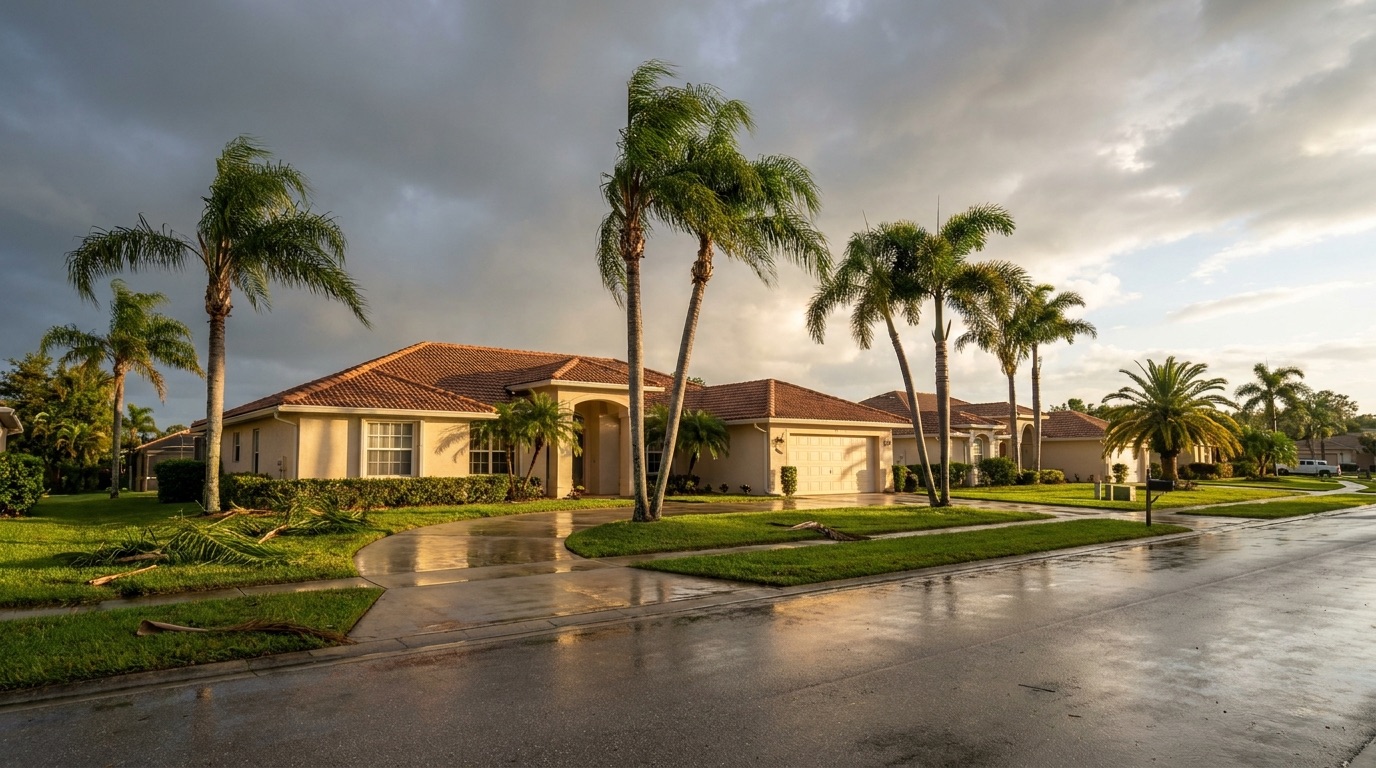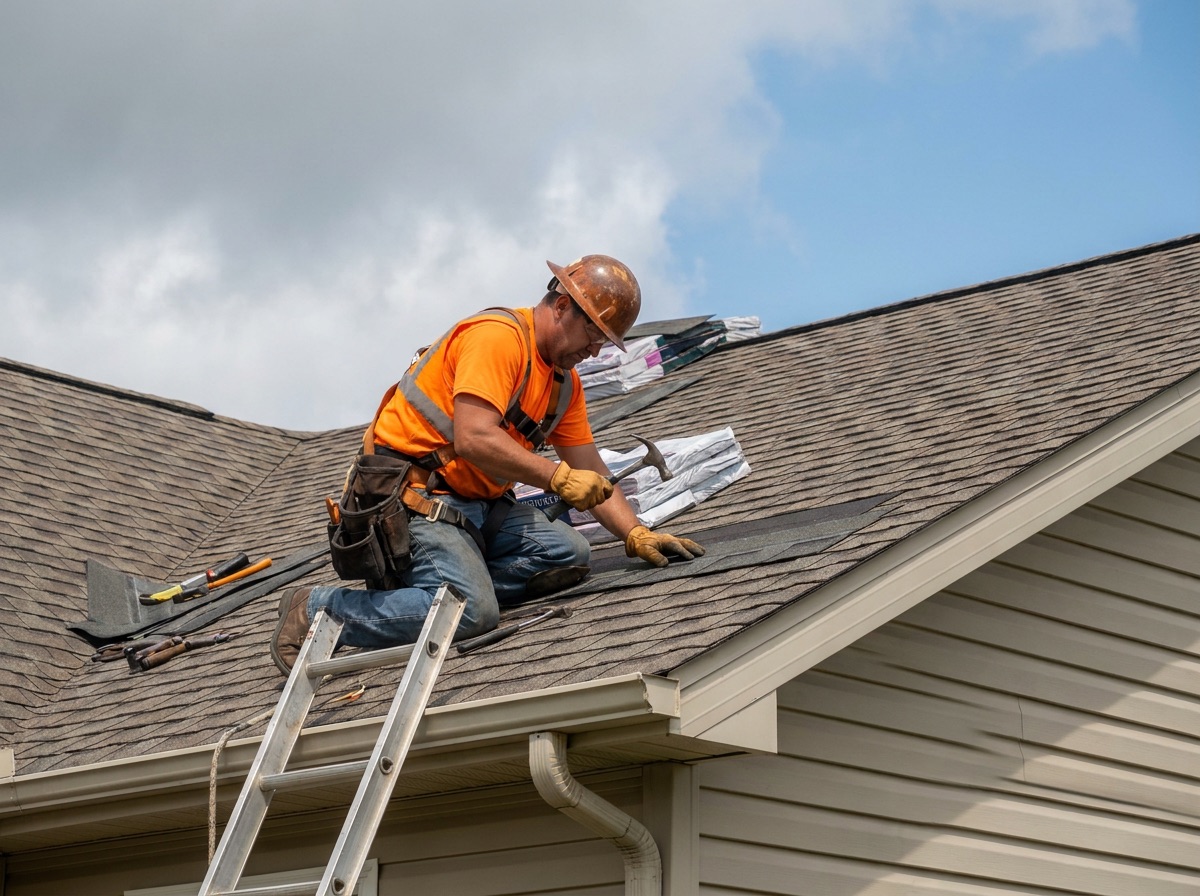
Storm Damage Roof Repair & Replacement in North Miami
Storm Damage 911 matches North Miami homeowners with vetted, licensed, insured storm damage roof repair contractors working across Miami-Dade County, free and with no obligation. You compare up to two written quotes from local pros and decide.
After wind or hail damage, a licensed roofing contractor should inspect your roof before small leaks become structural problems. Storm Damage 911 connects you with vetted, insured local roofers for a free inspection and written estimate, with no obligation and no cost to you.
Roofing in North Miami
Free, no obligation. We match you with up to two licensed, insured local pros so you can compare.
- Licensed pros
- Free, no spam
- One call, not eight
Got it. A vetted local pro will reach out shortly.
Add a few details to help us find the right match faster (optional):
Roofing after storms in North Miami
Miami-Dade County sits at roughly 6 feet above sea level on a low-lying limestone peninsula flanked by the Atlantic Ocean to the east and Biscayne Bay running through its core, making storm surge the primary life-safety threat: a direct Category 1 hurricane can push 1.5 feet or more of seawater into Zone A communities on barrier islands like Miami Beach, Key Biscayne, and Sunny Isles Beach, while a major Category 3-5 storm can drive surge several miles inland through the county's dense canal network. The county sits in a High Velocity Hurricane Zone (HVHZ), the highest wind-exposure classification in the continental United States, with design wind speeds of 170-200+ mph driving the most stringent building code in the country - a direct legacy of Hurricane Andrew (1992), which struck south Miami-Dade near Homestead and Kendall as a Category 5, causing over $25 billion in damage and remaining the benchmark event for regional construction standards. Hurricane Irma (2017) demonstrated the Bay-side surge threat specifically: 3-5 feet of inundation along the Biscayne Bay shoreline from Homestead to Brickell, with isolated peaks above 6 feet in Coconut Grove, while agricultural South Miami-Dade lost 50% of its crops. Inland flooding from the county's flat topography, porous limestone substrate, and extensive canal system compounds wind and surge damage: heavy rainfall from any slow-moving tropical system can inundate neighborhoods well outside coastal surge zones, and rising baseline sea levels (projected 10-17 inches above 2000 levels by 2040) are steadily reducing drainage margins countywide.
That is why matching with a pro who actually works in Miami-Dade County matters. The roofing specialists in our North Miami network are licensed for this trade, insured, and locally rated, and they give you a free, written assessment with no obligation.
A full roof replacement removes all existing roofing material down to the structural deck, repairs any compromised sheathing, and installs a complete new roofing system including underlayment, flashing, ventilation components, and finish material. In Florida, the dominant choices are architectural asphalt shingles, concrete or clay tile, and standing-seam metal, each carrying different wind-resistance ratings, lifespans, and insurance implications. In Illinois, asphalt shingles handle freeze-thaw cycles reliably, while metal is growing in popularity for commercial and residential work alike. The work requires a licensed contractor in both states: a Chapter 489 Certified or Registered Roofing Contractor in Florida, and an IDFPR-licensed roofer in Illinois. A permit is required in virtually every Florida and Illinois jurisdiction. Storm-damaged roofs in Florida intersect directly with homeowners insurance, but the post-2023 elimination of assignment-of-benefits agreements means homeowners must coordinate their own claim process.
The processHow roof repair & replacement in North Miami works, step by step
- Inspect and document existing conditionsA licensed contractor inspects the roof from both outside and inside the attic, documents all damage, measures the roof area in squares (1 square = 100 sq ft), photographs evidence of deck rot, water intrusion, flashing failure, and ventilation issues, and prepares a written scope of work.
- Pull permits and schedule materialsThe contractor applies for a building permit with the local jurisdiction - required in virtually all Florida counties and Illinois municipalities for full replacement. Standard asphalt materials typically arrive in 2-5 days; tile and metal orders can take 2-4 weeks. Work is scheduled around the permit approval window.
- Protect property and set up stagingCrew covers landscaping, HVAC equipment, and any skylight wells with tarps. Dumpster or dump trailer is positioned for tear-off debris. Roof jacks and staging are set where needed for safety and code compliance.
- Remove existing roofing to bare deckAll old shingles, underlayment, ridge caps, and flashing are stripped. Crew inspects exposed decking for soft spots, delamination, or rot. Damaged sheathing is replaced before proceeding; this is a common source of cost additions discovered on the day of work.
- Install underlayment and ice-and-water protectionA synthetic or felt underlayment is installed across the full deck. In Florida, a self-adhering peel-and-stick membrane (often required by Florida Building Code in certain wind zones) is applied at eaves, valleys, and penetrations. In Illinois, ice-and-water shield is required at the eave line to guard against freeze-thaw ice damming.
- Install drip edge, flashing, and penetration detailsMetal drip edge is set at eaves and rakes. Step flashing is woven in at all walls and dormers. Pipe boots, skylights, and chimney flashing are installed or replaced. Flashing is the most common failure point on older roofs and should always be replaced on a full tear-off.
- Install finish roofing materialShingles, tile, or metal panels are installed per manufacturer specifications and applicable building code. In Florida, this includes meeting Miami-Dade or Florida Product Approval requirements for wind uplift. Nail patterns and fastener schedules are inspected by the building department.
- Final inspection, cleanup, and closeoutContractor schedules the building department final inspection. A magnetic roller sweeps the yard for nails. All debris is removed. Contractor provides the homeowner with the permit card, manufacturer warranty documentation, and the contractor's workmanship warranty in writing.
How much does storm damage roof repair cost in North Miami?
| Cost factor | How it moves the price |
|---|---|
| Roofing material | Asphalt shingles are the lowest-cost option; metal roofing costs significantly more depending on profile and gauge; clay or concrete tile is the most expensive option. Material choice is the single largest driver of total project cost. |
| Roof size and pitch | Contractors price by the roofing square (100 sq ft). A 2,000 sq ft home typically has 22-28 squares of actual roof area once pitch is factored in. Steep pitches (above 6:12) require additional safety equipment and slower production, adding meaningfully to labor costs. |
| Deck condition and repairs | Replacing rotted or delaminated sheathing adds material and labor cost per sheet replaced. This cost is often not known until tear-off is complete; maintaining a contingency budget for older roofs is prudent. |
- Roof complexity and penetrations. Hips, valleys, dormers, skylights, chimneys, and multiple pitch changes each add labor time and material. A simple gable roof costs less per square than a complex hip-and-valley design with multiple penetrations.
- Geographic labor market. Roofing labor in South Florida coastal markets and the Chicago metro runs meaningfully above national averages. Post-storm surge pricing in Florida can add further cost in heavily impacted counties.
- Permit and inspection fees. Building permit fees vary by jurisdiction and are typically based on project valuation; verify the applicable fee with your local building department. Some jurisdictions require a wind mitigation inspection after completion, which adds cost.
- Removal and disposal of existing material. Tear-off and dumpster costs add meaningfully to the total for a standard residential roof. Tile roof tear-offs cost more due to weight and labor; some contractors credit back if tile can be recycled.
- Underlayment and code-required enhancements. Florida Building Code in many wind zones requires a self-adhering peel-and-stick underlayment system rather than standard felt, which adds meaningful cost to a typical project compared to regions with less stringent requirements.
Get your free written estimate
Free, no obligation. We match you with up to two licensed, insured local pros so you can compare.
- Licensed pros
- Free, no spam
- One call, not eight
Got it. A vetted local pro will reach out shortly.
Add a few details to help us find the right match faster (optional):
Should I repair or replace my roof after storm damage?
- Architectural asphalt shingles. The most common residential choice in both Florida and Illinois. Laminated 3-tab and architectural shingles offer 25-30 year manufacturer warranties and cost the least to install. In Florida, verify the product carries a valid Florida Product Approval (NOA) for the applicable wind speed zone.
- Impact-resistant asphalt shingles (Class 4). UL 2218 Class 4 rated shingles resist hail and wind-driven debris better than standard shingles and can qualify for insurance premium discounts in both states. Costs more per square foot than standard architectural shingles, with the premium varying by manufacturer and product line.
- Concrete or clay tile. Dominant in Florida's Spanish and Mediterranean-style homes. 50-year+ lifespan, excellent wind resistance when properly fastened, but requires a structurally adequate roof deck rated for additional dead load. Concrete tile costs more to install than asphalt; clay tile costs more than concrete due to material cost and weight.
- Standing-seam metal. Steel or aluminum panels with concealed fasteners. Lifespan of 40-70 years, highly wind-resistant, and increasingly popular in both Florida coastal markets and Illinois commercial builds. Installed cost for steel is substantially higher than asphalt; aluminum costs more than steel but is corrosion-resistant for coastal Florida.
- Exposed-fastener metal panels (R-panel or corrugated). Lower-cost metal option than standing-seam systems. Common on commercial and agricultural structures. The exposed fasteners require periodic inspection and resealing; not the preferred choice for residential work in high-humidity coastal Florida.
- Modified bitumen or TPO (low-slope and flat roofs). Applicable to flat or low-slope roof sections common on Florida concrete-block homes and Illinois commercial structures. Modified bitumen is generally the lower-cost flat roofing option; TPO (thermoplastic polyolefin) costs somewhat more but offers superior heat-welded seam performance. Both require torch-applied, cold-applied, or mechanically fastened installation by a qualified crew.
When to call a pro
- Roof age exceeding material lifespan: asphalt shingles beyond 20-25 years in Florida's UV and heat exposure (or 25-30 years in Illinois) are typically past cost-effective repair threshold
- Widespread granule loss visible in gutters or downspout discharge, indicating asphalt shingles have degraded past their protective mineral coating
- Multiple shingles curling, cupping, or buckling across large sections of the roof rather than in an isolated spot - a pattern indicating systemic material failure rather than a repairable wind event
- Daylight visible from inside the attic, or attic insulation wet after a rain event, indicating the waterproofing barrier has failed
- Sagging or soft areas in the roof plane, which signal compromised decking or structural members and require immediate evaluation
- Interior water stains or active leaks in more than one location, especially if previous isolated repairs have not held
- Flashing failures at chimneys, skylights, or walls that have been patched multiple times without lasting success, indicating the substrate has deteriorated
- Post-storm loss of a significant number of tiles, shingles, or metal panels covering more than one section of the roof, making a like-for-like repair impractical or unable to match aged material
Does homeowners insurance cover storm damage to your roof in Florida?
This information is educational only and does not constitute insurance or legal advice. Whether to file a claim is a personal financial decision that depends on your policy terms, deductible amount, and the nature of the damage. Homeowners insurance in both Florida and Illinois typically covers sudden, accidental damage caused by named perils such as wind, hail, and falling objects. It does not typically cover damage resulting from age, normal wear and tear, or lack of maintenance. In Florida, homeowners should be aware that for property insurance policies issued or renewed on or after January 1, 2023, Assignment of Benefits (AOB) agreements are prohibited under Florida SB 2-A. This means a contractor cannot take over your right to negotiate or collect directly from your insurer - you remain the policyholder of record throughout the claim. Florida insurers may also limit initial payment to the actual cash value of the damage and require proof that the homeowner has paid their deductible before releasing recoverable depreciation. Your deductible is your financial responsibility regardless of the claim outcome. Waiving a deductible - for example, when a contractor offers to "absorb" your deductible or build it into the estimate - is insurance fraud under Florida and Illinois law and can result in claim denial, policy cancellation, and criminal exposure for both the contractor and the homeowner. Document all damage with photos before any work begins, obtain a written estimate, and communicate directly with your insurer through your own adjuster or a licensed public adjuster if you need representation. Illinois homeowners face similar deductible responsibilities; submitting inflated damage claims or falsifying records is fraud under Illinois law.
Get matched with a vetted local pro
Free, no obligation. We match you with up to two licensed, insured local pros so you can compare.
- Licensed pros
- Free, no spam
- One call, not eight
Got it. A vetted local pro will reach out shortly.
Add a few details to help us find the right match faster (optional):
How to choose the right pro
- Verify active license in the correct state: in Florida, confirm the contractor holds a Certified or Registered Roofing Contractor license through the Florida DBPR online license lookup; in Illinois, confirm an active IDFPR roofing license (Limited or Unlimited as appropriate to your project type)
- Confirm current insurance certificates: request a certificate of general liability (minimum $100K in Florida, $250K-$500K in Illinois) and workers' compensation coverage naming your address; call the insurer to verify the policy is active before work begins
- Ask whether the contractor will pull the permit: the licensed contractor of record must pull the permit in their name; if a contractor asks you to pull the permit yourself, decline - this transfers liability to you and may void your homeowner's insurance coverage
- Request a written, itemized contract: the scope of work, material specifications (including manufacturer product name, color, and warranty class), start date, payment schedule, and what happens if hidden deck damage is found should all be in writing before you sign
- Ask specifically about Florida Product Approval or NOA: any roofing product installed in Florida must carry a valid Florida Building Code product approval for the applicable wind speed; confirm the contractor installs approved products and can provide the NOA number
- Check references for work of the same material type: a contractor experienced with asphalt shingles may not have the specialized skills for tile or standing-seam metal; ask for references on comparable projects completed in the past 24 months
- Ask about subcontractors: some roofing companies sell the job and subcontract the installation to an unlicensed or under-insured crew; ask whether your job will be completed by the company's own employees and whether subcontractors are licensed and covered under the same insurance
- Avoid storm-chasing contractors: after a major Florida or Illinois weather event, out-of-state contractors often solicit work door-to-door; confirm any contractor has a verifiable permanent business address, a local license (or Florida/Illinois state license), and has not asked you to sign an AOB or pre-loss assignment
How long should a new roof last?
Roof replacement warranties come from two separate sources. The manufacturer warranty covers material defects in shingles, tile, or metal panels; standard architectural asphalt shingles typically carry 25-30 year limited warranties, with premium lines offering 50-year or lifetime limited warranties. The warranty is often prorated after the first 10 years and may require installation by a registered contractor to be valid - ask your contractor to register the installation with the manufacturer at project completion. The contractor's workmanship warranty covers the quality of installation, including flashing, penetrations, and fastening; reputable contractors offer 2-10 year workmanship warranties in writing. In Florida, contractors are subject to Florida Statute 558 notice-and-cure requirements if a construction defect claim arises. Neither manufacturer nor workmanship warranties typically cover damage caused by subsequent wind events, foot traffic, or acts of the homeowner. Tile and metal roofs often carry longer effective warranty periods (50 years to lifetime on materials) but the workmanship warranty windows are similar. Always get the warranty documents in writing at job closeout; a verbal promise of coverage has no legal weight.
Avoid theseHow to avoid storm damage roofing scams
- Choosing on price alone without verifying license and insurance: an unlicensed or uninsured contractor saves money upfront and creates substantial financial and legal exposure if an injury occurs on your property or the work fails inspection
- Paying a large deposit before work begins: a reasonable deposit is 10-30% of the contract; full or majority upfront payment before material delivery removes your leverage if the contractor underperforms or abandons the job
- Skipping the permit: homeowners sometimes let contractors skip the permit to save time or money; an unpermitted roof replacement can create problems at resale, void your homeowner's insurance coverage for subsequent claims, and result in forced re-roofing at your expense to bring the work into compliance
- Signing an AOB or pre-loss assignment without understanding it: in Florida, post-January 2023 policies prohibit AOB for property insurance, but some contractors present similar documents under different names; signing over control of your claim to a third party can result in litigation, inflated invoices, and claim denial
- Accepting a verbal scope of work or a one-line estimate: a professional contractor provides an itemized written contract specifying materials by manufacturer and product line, fastener pattern, underlayment type, and how hidden damage will be handled and priced - ambiguity in the contract becomes a dispute after work starts
- Ignoring ventilation during a replacement: replacing the surface material without evaluating and correcting attic ventilation is a common oversight; inadequate ventilation shortens shingle life, voids some manufacturer warranties, and creates moisture problems in the attic that will require additional remediation
Roofing in North Miami: questions
Do you cover North Miami and nearby areas?
Yes. We match roofing requests across North Miami and all of Miami-Dade County. The pro we connect you with is local and licensed to work in your area.
How fast can a roofing pro reach me in North Miami?
For North Miami homes, network pros usually schedule a free assessment within a day or two, faster during active storm response.
Should I repair or replace my roof?
Repair makes sense when damage is isolated to a small section and the rest of the roof has remaining serviceable life. Replacement is typically warranted when deterioration is widespread, the roof is near its material lifespan, or the cost of repair would exceed a significant portion of a full replacement. A licensed contractor can inspect the roof and give you an honest written recommendation.
How long does a roof replacement take from start to finish?
Installation of a standard asphalt shingle roof on an average home takes 1-3 days of actual work. Tile roofs take 8-12 days; metal roofs take 7-14 days. The full project timeline from your first contact through final inspection is typically 2-4 weeks, accounting for permit approval, material delivery, and scheduling. Post-storm demand in Florida can extend scheduling lead times significantly.
Do I need a permit for a roof replacement in Florida or Illinois?
Yes, in virtually all Florida jurisdictions a building permit is required for a full roof replacement. The permit triggers an inspection - typically a nailing pattern inspection mid-installation and a final inspection after completion. In Illinois, permit requirements are set at the municipal level; most cities and suburban jurisdictions require a permit for full replacement. The licensed contractor should pull the permit in their name. Never allow a contractor to advise you to pull the permit yourself or to skip the permit to save time.
How much does a roof replacement cost in Florida?
Florida roof replacement costs run higher than national averages due to building code requirements, hurricane wind-resistance standards, and labor market conditions. Asphalt shingle roofs cost less than metal or tile; metal roofing installed to Florida Product Approval standards is substantially more expensive; clay or concrete tile is the highest-cost option. Coastal markets and post-storm demand can push prices above typical ranges. Get a written, itemized estimate for your specific home.
Will my insurance company pay for a full roof replacement or just repairs after a storm?
The extent of insurance payment depends on your policy terms, the scope of documented damage, and your adjuster's findings. Many policies cover full replacement when damage is widespread enough that a repair would not restore pre-storm function. A licensed contractor's written damage assessment is the key document that supports a replacement scope in your claim.
What is a wind mitigation inspection and do I need one after my new roof?
A wind mitigation inspection is a separate assessment, performed by a licensed inspector, that documents features of your roof that reduce hurricane wind damage risk - including roof shape, deck attachment, roof covering type, and opening protection. In Florida, a favorable wind mitigation report can qualify you for homeowner's insurance discounts that may be substantial. It is not required by the building department but is often worth scheduling after a new roof installation. The inspection adds a modest cost and the potential premium savings may recover that cost relatively quickly.
How long should a new roof last?
Standard 3-tab asphalt shingles carry 20-25 year warranties but in Florida's UV and heat environment often show deterioration earlier than in northern climates. Architectural laminated shingles typically carry 30-year limited warranties. Impact-resistant shingles and premium lines offer 50-year or lifetime limited warranties. Concrete tile commonly lasts 50+ years. Metal roofing has a material lifespan of 40-70 years. The actual service life depends heavily on installation quality, ventilation adequacy, and how well the roof weathers storm events. Maintenance - clearing debris, keeping gutters flowing, resealing exposed fasteners on metal - extends life across all material types.
What questions should I ask a roofing contractor before signing a contract?
Ask for their license number and confirm it through the state licensing database before meeting. Ask whether they carry general liability and workers' compensation insurance and request a certificate. Ask who will pull the permit and who will be on-site performing the work. Ask for the specific manufacturer name, product line, and color of materials they are proposing. Ask how they price additional deck repairs if found during tear-off. Ask for the workmanship warranty in writing, including what it covers and how warranty claims are handled. Ask for two or three references on comparable projects completed in the past year. Ask for a written, itemized contract - not a one-page invoice - before any work begins.
What is considered storm damage to a roof?
Storm damage includes missing or broken shingles, dented metal, cracked tiles, granule loss or bruising from hail impacts, compromised flashing, and structural sagging or decking exposure caused by high winds or falling debris. A licensed contractor can identify damage that is not visible from the ground and document findings for your insurance claim.
Will insurance pay for roof hail damage?
Homeowners insurance typically covers hail damage to a roof when hail is a covered peril under your policy. Coverage depends on your policy terms, deductible, and the age and condition of the roof. A licensed contractor in our network can inspect the damage, document evidence for your adjuster, and provide a written estimate to support your claim.
Does insurance cover hail damage to a roof?
Standard homeowners policies generally cover sudden hail damage as a named peril, but coverage specifics vary by policy. Your deductible applies, and some policies use actual cash value rather than replacement cost for older roofs. We match you with a licensed local contractor who can document the damage and help you understand what your policy likely covers.
How much hail damage is needed to replace a roof?
Whether hail damage requires full replacement or repair depends on the density of impacts, the extent of granule loss, and whether the damage is functional or cosmetic. A licensed contractor uses established inspection protocols to make that determination in person. The answer often depends on the roof material, age, and the specific hail event documented.
Should I get my roof inspected after a hail storm?
Yes. Hail damage is often not visible from the ground and can go undetected for months until a leak develops. A licensed contractor can identify granule loss, shingle bruising, and cracked material that signal functional damage. A prompt inspection also preserves your ability to file an insurance claim within your policy's filing window.
What should I do immediately after storm damage to my roof?
Photograph and video the exterior from a safe vantage point without climbing onto the roof. If active leaking is occurring, protect interior contents with buckets or towels. Contact your insurer to open a loss report, then request a free assessment from a licensed contractor to document the damage with a written report before any repairs begin.