Mold Remediation in Town 'n' Country
Storm Damage 911 matches Town 'n' Country homeowners with vetted, licensed, insured mold contractors working across Hillsborough County, free and with no obligation. You compare up to two written quotes from local pros and decide.
Mold can start within 48 to 72 hours of water intrusion. Storm Damage 911 connects you with licensed remediation pros who contain, remove, and treat affected areas, and document the work for your records.
Mold in Town 'n' Country
Free, no obligation. We match you with up to two licensed, insured local pros so you can compare.
- Licensed pros
- Free, no spam
- One call, not eight
Got it. A vetted local pro will reach out shortly.
Add a few details to help us find the right match faster (optional):
Mold after storms in Town 'n' Country
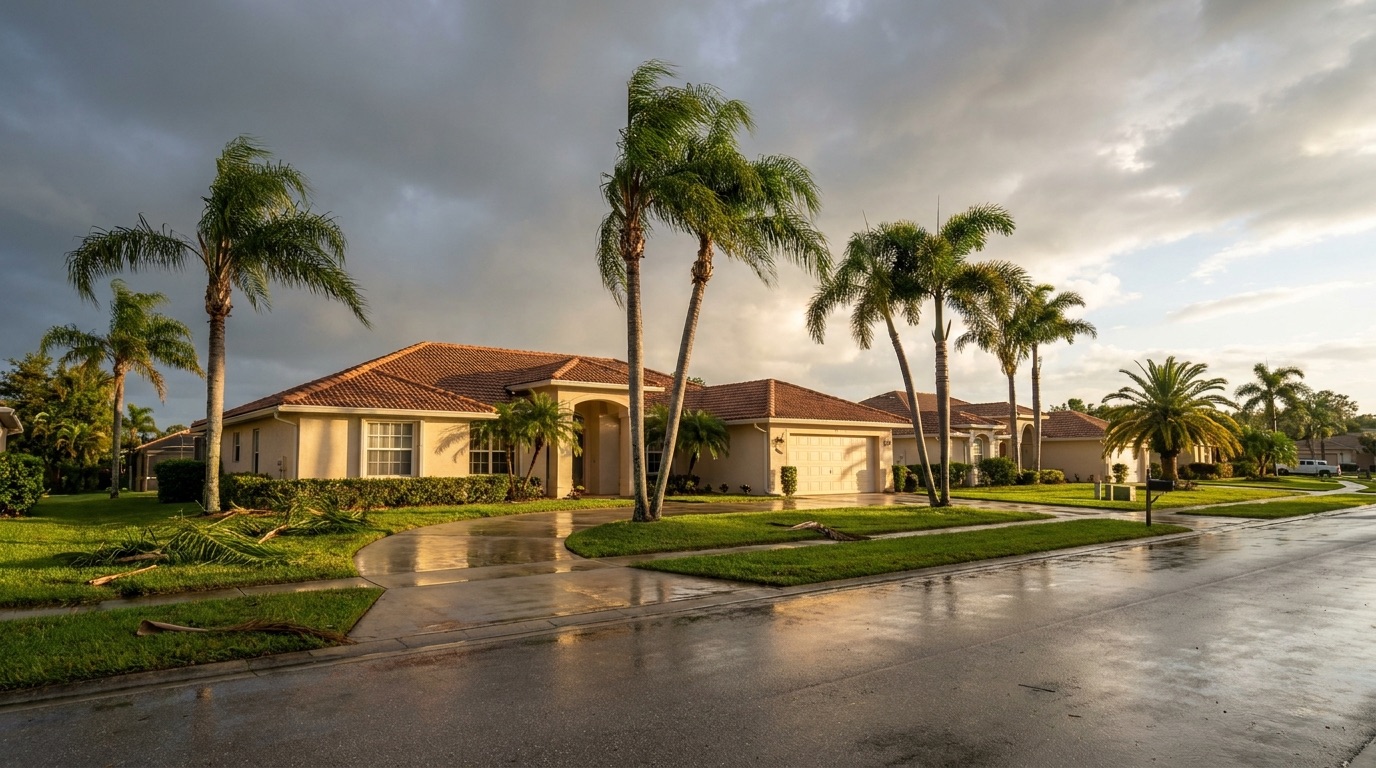
Hillsborough County sits at the head of Tampa Bay and faces a compounded storm-damage profile: hurricane-force winds and tropical storm gusts peel roofing, shatter windows, and down trees, while storm surge from direct or near-miss Gulf landfalls can push 7 or more feet of saltwater inland along coastal and river corridors. The 2024 season delivered a one-two punch - Hurricane Helene's record surge caused $1.8 billion in residential damage countywide, followed two weeks later by Hurricane Milton's 16-18 inches of rainfall that drove the Hillsborough River to an all-time record crest of 38 feet, flooding neighborhoods that had never flooded before. Inland areas including Plant City face rapid-onset riverine and stormwater flooding from tropical rain events, while the entire county sits within NOAA-designated surge evacuation zones that were expanded after 2024 to reflect the compounding risk of simultaneous wind, surge, and inland flooding.
That is why matching with a pro who actually works in Hillsborough County matters. The mold specialists in our Town 'n' Country network are licensed for this trade, insured, and locally rated, and they give you a free, written assessment with no obligation.
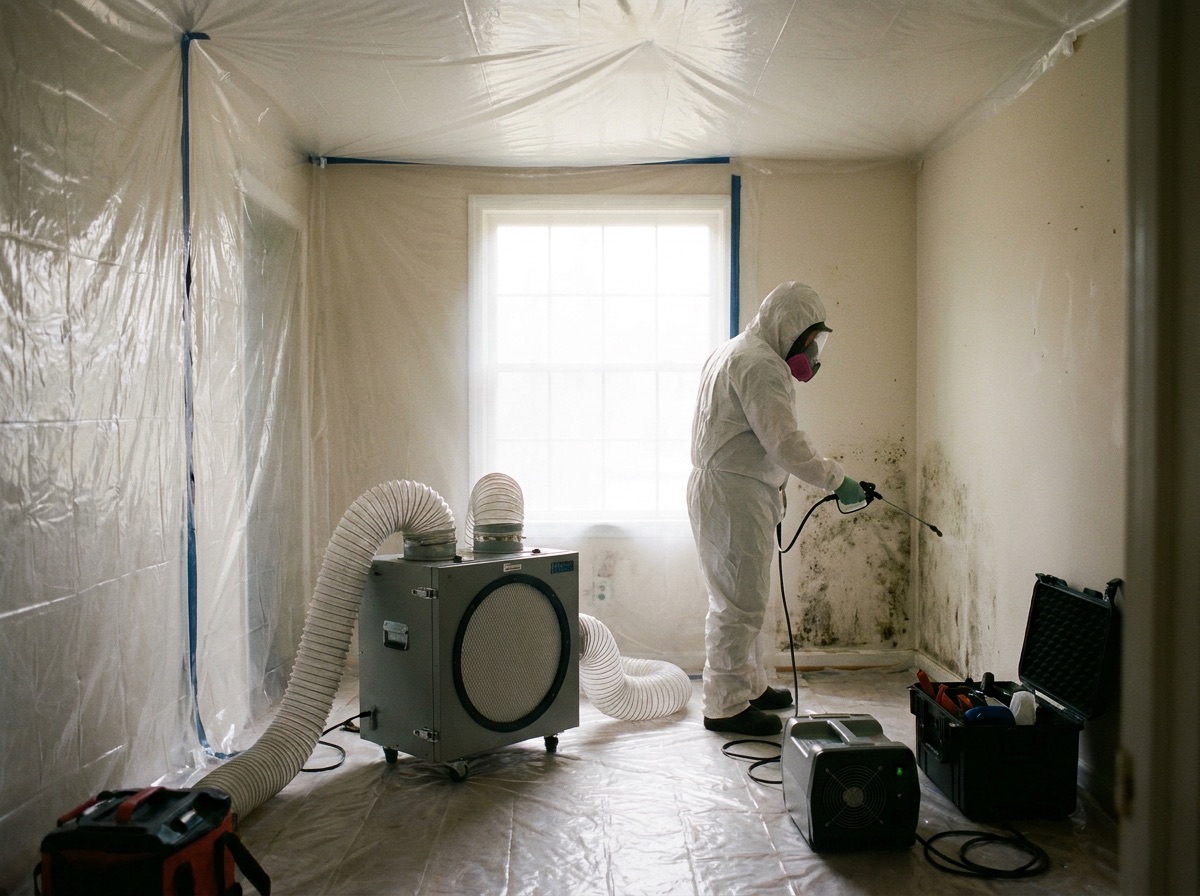
Mold remediation is the professional containment, removal, and post-treatment process that returns a structure to normal fungal ecology after mold colonies have established on building materials. In storm-damage contexts, mold becomes a credible threat within 24-72 hours of water intrusion - particularly in Florida's high-humidity environment - making rapid response essential. Professional remediation goes well beyond cleaning visible growth: it requires establishing airtight containment with negative air pressure, removing or treating contaminated materials, running HEPA air scrubbers, applying antimicrobial treatments, and verifying success through independent post-remediation clearance testing. Florida mandates a state-issued Mold Remediator license for any compensated remediation work; Illinois as of January 2025 requires IICRC or NORMI third-party certification plus state registration. Costs range widely based on affected area, location in the home, and whether structural materials require removal. A clearance test by an independent assessor - not the remediation contractor - is the only objective confirmation that remediation succeeded.
The processHow mold remediation in Town 'n' Country works, step by step
- Initial inspection and moisture mappingA licensed assessor or the remediation contractor documents visible mold growth, uses moisture meters and thermal imaging to locate hidden saturation behind walls, under flooring, and in ceiling cavities, and identifies the source of water intrusion. In Florida, the assessor and remediator must be separately licensed individuals.
- Containment setupWorkers seal the affected area with 6-mil polyethylene sheeting over all openings, doorways, HVAC registers, and light fixtures. A negative air pressure environment is established using an exhaust fan vented outside, so any disturbed spores flow outward rather than into clean areas of the home.
- Source and structural material removalPorous materials that cannot be adequately cleaned - drywall, insulation, carpeting, and heavily contaminated wood - are double-bagged in 6-mil poly and removed from the containment zone. The moisture source (damaged roofing, broken plumbing, failed flashing) must be corrected before remediation proceeds; otherwise regrowth is certain.
- HEPA vacuuming of all surfacesAll remaining hard surfaces within the containment zone are HEPA-vacuumed to remove loose spores and debris before wet cleaning begins. Standard vacuums are not used - they exhaust spores back into the air.
- Antimicrobial cleaning and treatmentAll surfaces are wiped with EPA-registered antimicrobial or biocide solution applied on wet rags to prevent spore dispersal. Wood framing and structural components receive an antimicrobial encapsulant as a final treatment after cleaning is complete.
- HEPA air scrubbingHEPA-filtered air scrubbers run continuously inside the contained area, cycling air through filters repeatedly for a minimum of 24-48 hours to capture airborne spores and particulate. This continues until post-remediation sampling is ready.
- Independent post-remediation clearance testingAn independent licensed assessor (a separate party from the remediator, required by Florida law) collects air and/or surface samples inside and outside the work area and compares spore counts and species. The remediated space must return to normal fungal ecology - matching or improving on outdoor baseline - before clearance is issued.
- Reconstruction and final documentationAfter clearance, removed materials are replaced by a licensed contractor. The remediator provides a written remediation report documenting scope, methods, products used, and clearance results - a document that may be required by the insurer and is valuable for future property disclosures.
How much does mold remediation cost in Town 'n' Country?
| Cost factor | How it moves the price |
|---|---|
| Affected square footage | Cost varies based on affected square footage, contamination extent, and material type. Small isolated sections cost significantly less than large multi-room jobs involving structural materials or HVAC systems. |
| Location within the home | Attic remediation can be substantial and increases further when structural damage is present. Crawl space jobs are typically less costly than attic work but are still influenced by size and access constraints. HVAC system contamination requires specialized equipment and is among the most expensive scenarios when the full duct network is affected. |
| Material removal and disposal | Drywall, insulation, and flooring that must be removed and safely disposed of add significant labor and materials cost on top of remediation itself, depending on the scope of demolition. |
- Mold type and colony density. Dense black mold (Stachybotrys) or heavily saturated colonies require more passes, longer air scrubbing cycles, and more aggressive treatment, increasing labor hours. Type alone does not change price dramatically, but density and penetration depth do.
- Accessibility. Mold hidden behind finished walls, under slabs, or in attic structural members requires opening or demolishing building assemblies before remediation can begin. Labor costs rise meaningfully when access work is needed.
- Extent of structural material affected. When mold has penetrated to the framing, joists, or subfloor, remediation alone is insufficient - structural repair or replacement is required. This can push total project costs substantially higher on large storm-damage jobs.
- Clearance testing and independent assessor fees. Post-remediation verification testing by an independent assessor adds cost to the overall project and is separate from the remediation contractor's scope. In Florida, using the same company for assessment and remediation is prohibited.
- Moisture source correction. Remediation without fixing the source will fail. Roof repair, plumbing correction, or improved drainage may add substantially to the total project cost and is usually handled by a separate licensed contractor.
Get your free written estimate
Free, no obligation. We match you with up to two licensed, insured local pros so you can compare.
- Licensed pros
- Free, no spam
- One call, not eight
Got it. A vetted local pro will reach out shortly.
Add a few details to help us find the right match faster (optional):
When do you need mold remediation vs. mold removal?
- Antimicrobial encapsulant coatings. Applied to structural wood members after cleaning, these coatings seal residual spores and inhibit regrowth. Used where complete removal of contaminated wood is impractical. Not a substitute for thorough cleaning, but appropriate as a final treatment layer on framing.
- HEPA filtration equipment grade. Commercial-grade HEPA air scrubbers filter particles down to 0.3 microns at 99.97% efficiency. The number and CFM rating of units deployed affects remediation speed and cost. Residential-grade machines are insufficient for professional work.
- Containment barrier thickness. Standard containment uses 6-mil polyethylene sheeting. Critical containment for high-load situations (black mold, HVAC contamination) uses dual layers. Thicker barriers reduce cross-contamination risk during active work.
- Replacement drywall material. Standard drywall can be replaced with moisture-resistant or mold-resistant gypsum board (Type X or paperless) in areas prone to recurring humidity, particularly bathrooms, basements, and Florida coastal regions. Adds modest cost but reduces future risk.
- Vapor barriers in crawl spaces. After crawl space remediation, installing a reinforced vapor barrier encapsulation system prevents ground moisture from re-entering. Cost varies with crawl space size and access. Highly recommended in Florida and Illinois basement and crawl situations.
When to call a pro
- Visible mold growth - fuzzy or slimy patches in any color (black, green, white, orange) on walls, ceilings, grout, or framing, particularly after a storm, flood, or roof leak
- Persistent musty or earthy odor in a room or area even after cleaning, especially in basements, attics, crawl spaces, or behind recently water-damaged walls
- Unexplained or worsening respiratory symptoms, nasal congestion, eye irritation, headaches, or skin reactions that improve when occupants leave the building
- Water stains, bubbling paint, warping drywall, or buckling flooring - even without visible mold - indicating moisture intrusion that creates ideal colonization conditions
- Recent water event within 24-72 hours - a storm, roof breach, plumbing failure, or HVAC condensation overflow - without immediate professional drying of affected materials
- Discoloration or staining on caulking, grout, window frames, or HVAC ductwork that returns quickly after surface cleaning
- Discovery of mold during renovation or repair work when walls, ceilings, or floors are opened and previously hidden growth is exposed
- Home inspection report flagging elevated moisture readings or potential mold in attic, crawl space, or below-grade areas during a real estate transaction
Is mold remediation covered by homeowners insurance in Florida?
This information is educational only and is not claim advice. Whether a specific mold loss is covered depends entirely on the language of your individual policy, the documented cause of the moisture, and your insurer's investigation findings. Generally, homeowners insurance may cover mold remediation when it results directly from a sudden, accidental covered peril - such as storm-driven rain entering through a wind-damaged roof - but most standard policies apply a separate mold sub-limit that can be well below actual remediation costs. Mold caused by flood water (storm surge, rising water) is excluded from standard homeowners policies in both Florida and Illinois; a separate flood insurance policy (NFIP or private) is required for that coverage. Mold resulting from long-term moisture problems, deferred maintenance, or gradual seepage is routinely excluded. Some insurers offer optional mold endorsements that raise the sub-limit for an additional premium. In Florida and Illinois, the homeowner is responsible for their deductible on any covered claim. Waiving, absorbing, or misrepresenting a deductible is insurance fraud under Florida Statute 817.234 and Illinois law - it is illegal regardless of how a contractor presents the arrangement. Do not file a claim for mold that predates a covered event, and do not misrepresent the cause of moisture to support a claim. Consult a licensed public adjuster or attorney if you have questions about a specific claim.
Get matched with a vetted local pro
Free, no obligation. We match you with up to two licensed, insured local pros so you can compare.
- Licensed pros
- Free, no spam
- One call, not eight
Got it. A vetted local pro will reach out shortly.
Add a few details to help us find the right match faster (optional):
How to choose the right pro
- Verify Florida licensing directly: check the individual's Mold Remediator license number at myfloridalicense.com before signing any contract. In Illinois, confirm IDPH registration and IICRC or NORMI certification. Do not accept a contractor's verbal assurance alone.
- Confirm that assessment and remediation are performed by separate entities. Florida law prohibits the same licensed individual from both assessing and remediating the same property - this separation protects you from conflict-of-interest inflated scopes.
- Ask for proof of general liability insurance with mold-specific coverage. Florida requires a minimum $1 million policy. Ask for a certificate of insurance naming you as the additional insured for the project.
- Ask who performs post-remediation clearance testing and who pays if it fails. A reputable contractor will use an independent third-party assessor and will agree in writing to re-remediate at no additional charge if clearance fails.
- Request a written scope of work and protocol before work begins, not after. This should specify containment methods, materials to be removed, antimicrobial products to be used, and how final clearance will be documented.
- Ask whether the moisture source will be corrected as part of the project or whether that is a separate contract. Remediation performed before the source is fixed will fail - clarify who is responsible and confirm it is addressed before work begins.
- Check that the contractor has verifiable references for storm-damage mold projects specifically. HVAC, attic, and post-flood basement jobs are operationally different from cosmetic surface mold; ask for relevant experience.
- Get at least two written bids. Be cautious of bids that are substantially lower than others - under-scoped work that fails clearance testing costs more in the long run than a properly priced first remediation.
What should a mold remediation contract include?
Most reputable mold remediation contractors offer a workmanship warranty of 1-2 years covering any recurrence of mold in the treated area that is attributable to the original remediation work. This warranty is typically voided if a new moisture source is introduced after completion - meaning a new roof leak, plumbing failure, or flooding event that reintroduces water is not covered. Some contractors back their warranty by guaranteeing a passing post-remediation clearance test and agreeing to re-do work at no charge if clearance fails the first time. Antimicrobial encapsulant product manufacturers may offer separate product warranties of 5, 10, or up to 20 years against mold regrowth on treated surfaces, conditional on the moisture source remaining corrected. No legitimate warranty covers regrowth caused by ongoing or new moisture problems; confirm that the warranty terms specify what conditions void it before signing. Always get warranty terms in writing as part of the remediation contract.
Avoid theseWhat mistakes should I avoid when hiring a mold remediation company?
- Waiting more than 72 hours to call a professional after water intrusion - mold colonizes porous materials rapidly in warm, humid environments (especially Florida), and delay converts a drying job into a full remediation project
- Attempting DIY remediation on areas larger than 10 square feet, in HVAC systems, or on structural materials - improper containment spreads spores to unaffected areas and may not address hidden growth, creating a larger and more expensive problem
- Hiring the same company to both assess and remediate in Florida, which is illegal and eliminates the independent oversight that protects homeowners from inflated scopes or incomplete work
- Skipping independent post-remediation clearance testing to save money - clearance testing is the only objective confirmation that remediation succeeded; without it, you have no evidence the work was effective and no contractual basis to demand re-work
- Repainting or encapsulating over visible mold without professional remediation - paint and coatings do not kill mold, they trap it, and the colony continues to grow and degrade the material beneath
- Reoccupying the remediated space before clearance results are received and confirmed - HEPA air scrubbing and drying take time, and premature reoccupancy exposes occupants to residual spore loads before the space has returned to safe levels
Mold in Town 'n' Country: questions
Do you cover Town 'n' Country and nearby areas?
Yes. We match mold requests across Town 'n' Country and all of Hillsborough County. The pro we connect you with is local and licensed to work in your area.
How fast can a mold pro reach me in Town 'n' Country?
For Town 'n' Country homes, network pros usually schedule a free assessment within a day or two, faster during active storm response.
How likely is mold after water damage?
Mold growth is very likely after water intrusion that is not professionally dried within the first one to two days. Mold spores are naturally present in most indoor environments and need only moisture and an organic food source to colonize. Enclosed wet materials, limited ventilation, and temperatures above 40 degrees all increase the probability and speed of visible growth.
What is the difference between mold removal and mold remediation?
Mold removal typically refers to cleaning visible surface mold. Mold remediation is a more complete process: it includes containment to prevent cross-contamination, physical removal or treatment of affected materials, HEPA air scrubbing, antimicrobial treatment, correction of the moisture source, and independent post-remediation verification that spore counts have returned to normal. Professional standards and Florida law use the term remediation to describe the full process, not surface cleaning.
Is mold remediation covered by insurance?
Coverage depends on the cause of the mold and your specific policy. When mold results from a sudden covered water event such as a storm-related leak or burst pipe, many homeowners policies include remediation coverage. Mold from long-term moisture, deferred maintenance, or flooding generally is not covered under standard policies. A licensed contractor can help document the cause to support your claim.
What does mold remediation cost in Florida?
Most residential mold remediation projects range from relatively modest cost for small isolated areas to substantial cost for large jobs involving multiple rooms, structural materials, or HVAC systems. Florida's high humidity and warm climate mean mold grows faster and spreads further than in cooler states, which tends to push project costs toward the higher end when water damage is not addressed quickly.
How long does mold remediation take?
Active remediation - containment setup, material removal, cleaning, antimicrobial treatment - typically takes 1-5 days for a standard residential project. Following that, HEPA air scrubbers run continuously for at least 24-48 additional hours. Post-remediation clearance sampling is then collected, and laboratory results typically take 1-3 business days. From start to clearance certificate, most projects span 5-10 days. Large whole-house projects or those involving structural repair and reconstruction can take several weeks.
What is black mold and should I be more worried about it?
The term 'black mold' colloquially refers to Stachybotrys chartarum, a dark-colored species associated with chronic high moisture. All mold should be remediated professionally when it exceeds 10 square feet or occurs in structural materials or HVAC systems - the species is secondary to the remediation protocol. Stachybotrys is slow-growing and requires persistently wet material (not just a one-time wetting), so its presence may signal a longer-standing moisture problem. Professional air and surface sampling identifies the species present, which informs both remediation scope and any health concerns. No DIY remediation is appropriate for any confirmed or suspected Stachybotrys growth.
Can mold come back after professional remediation?
Yes, if the underlying moisture source is not permanently corrected. Mold remediation eliminates the existing colony and treats the affected materials; it does not prevent future mold if water intrusion recurs. A properly scoped remediation that corrects the moisture source, removes or treats all contaminated material, and passes independent clearance testing will not produce regrowth in treated areas under dry conditions. Warranties are voided by new moisture events. In Florida, ongoing humidity management - properly sized and maintained HVAC, vapor barriers in crawl spaces, adequate ventilation - is part of preventing recurrence.
Can you live in a house during mold remediation?
Whether you can remain in the home depends on the location and scope of the remediation, the type of mold present, and the sensitivity of household members. Small, isolated projects in a single contained room may allow normal use of the rest of the home. Large-scale projects requiring whole-floor containment or affecting central air handling systems typically require temporary relocation during active work.
What should a mold remediation contract include?
A complete remediation contract should specify: the scope of affected areas, the remediation protocol (containment method, materials to be removed, cleaning agents and antimicrobials to be used), who performs post-remediation clearance testing and at whose cost, what happens - and who pays - if clearance testing fails, the contractor's license number (Florida) or IICRC/NORMI certification and IDPH registration number (Illinois), proof of insurance, a written warranty covering workmanship and specifying what conditions void it, and a timeline. Do not sign a contract that lacks a written protocol or that fails to address clearance testing and warranty terms explicitly.
Can water damage turn into mold?
Yes. When structural materials remain damp for more than one to two days, naturally occurring mold spores can colonize wood framing, drywall, insulation, and other organic surfaces. Water damage that is not professionally dried using moisture mapping and commercial drying equipment frequently leads to mold growth inside walls and under flooring, often before it becomes visible or causes an odor.
Is mold from water damage dangerous?
Mold from water damage can be harmful, particularly with elevated indoor concentrations or prolonged exposure. Reactions vary by individual and mold type, with respiratory conditions and weakened immune systems increasing vulnerability. Regardless of mold species, visible or suspected growth in occupied living spaces warrants professional assessment and remediation to remove the contamination rather than simply covering it.
How to check for mold after water damage?
Look for visible discoloration, fuzzy growth, or dark spots on walls, ceilings, baseboards, and under sinks. A persistent musty odor in previously wet areas is a reliable indicator of hidden growth. Professional mold inspection with moisture meters and air sampling can detect mold inside wall cavities and behind surfaces before it becomes visible, which is important for any significant water event.
Is mold remediation worth it?
For most homeowners, professional mold remediation is worth the investment. Unaddressed mold continues to spread, compromises structural materials, and can affect indoor air quality over time. Attempting to clean mold without proper containment and air filtration can redistribute spores through the structure. Professional remediation followed by a clearance test confirms the problem is resolved rather than relocated.
What to do after mold remediation?
Schedule a clearance test with an independent inspector to confirm spore counts have returned to acceptable levels. Address the source of moisture that allowed growth in the first place to prevent recurrence. Replace or restore structural materials that were removed during remediation, and monitor previously affected areas during the following weeks for any signs of returning moisture or odor.
Why is mold remediation so expensive?
Professional mold remediation requires containment barriers, negative air pressure equipment, HEPA air scrubbers, protective gear, and licensed labor. Affected porous materials must often be removed and disposed of under specific handling protocols. In Florida, the licensed assessor and remediator must be separate individuals, adding structure to the project. The cost reflects the complexity of safely containing and clearing a biological contaminant from a living space.