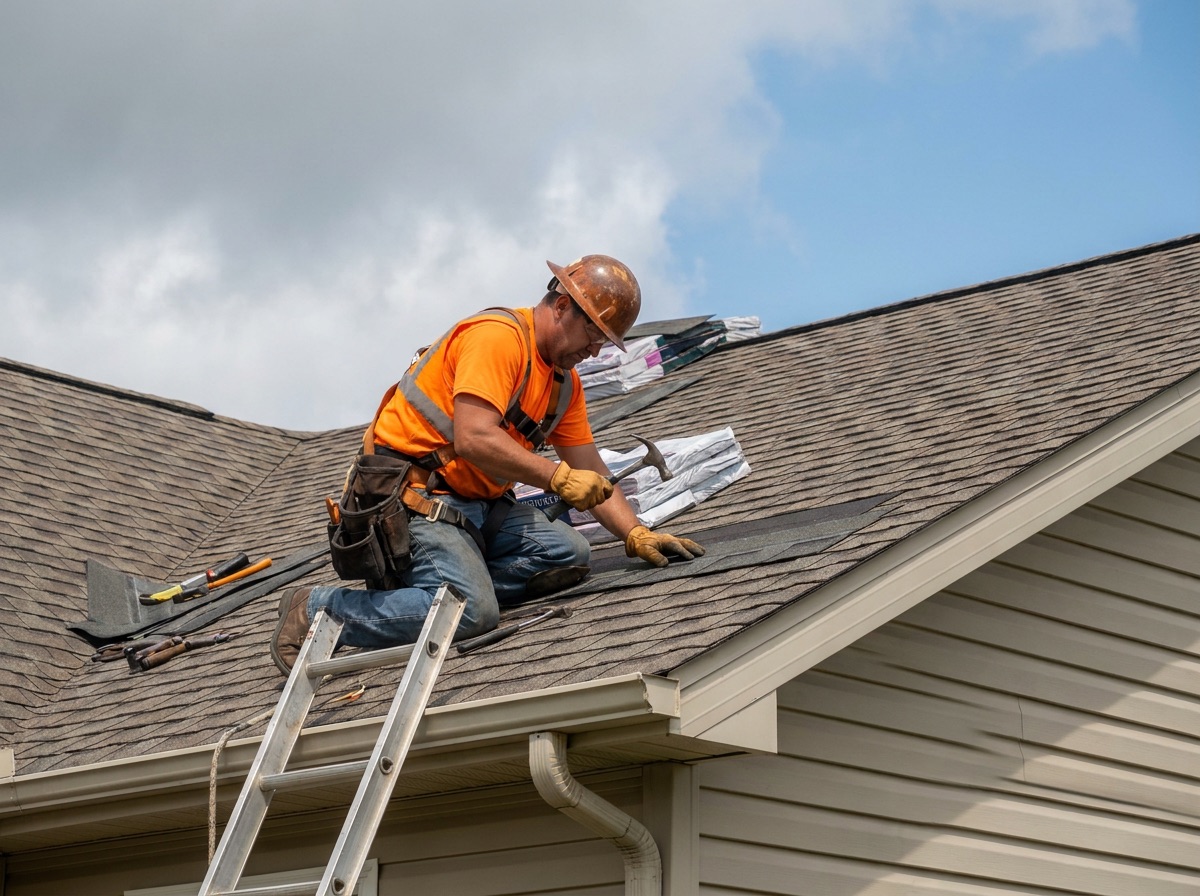
Emergency Roof Repair in Aurora
Same-day stabilization of severe roof damage to stop water intrusion. We connect Aurora homeowners with vetted, licensed local pros, free.
Emergency Roof Repair in Aurora
Free, no obligation. We match you with up to two licensed, insured local pros so you can compare.
- Licensed pros
- Free, no spam
- One call, not eight
Got it. You are in good hands.
A vetted local pro will reach out shortly. For an active emergency, call us now at (813) 555-0911.
Aurora homeowners turn to emergency roof repair after the storms that hit Kane County. Here is exactly what the work involves, what it costs, and how to get matched with a local pro.
Emergency roof repair is the immediate stabilization of a roof that has sustained damage severe enough to allow active or imminent water intrusion - a missing section of shingles, a fallen tree limb through the deck, a ripped-off hip or ridge section, or a torn flat membrane after a storm. The goal at this stage is not permanent repair; it is stopping the water before the next rain event compounds structural damage inside the home. In Florida, the interval between a damaging storm and the next rainfall can be measured in hours during active tropical weather patterns. In Illinois, spring derecho events and late-season ice storms create the same urgency. Emergency response involves weatherproofing the breach with heavy-duty tarps, temporary flashing, or spray-applied sealants, followed by a damage assessment that documents scope for permanent repair. Same-day service carries a cost premium of roughly 25 - 40% over scheduled repair pricing.
When you need itSigns you need this service
- A tree limb or whole tree has fallen onto the roof, creating an opening through the deck or breaking structural rafters
- A large section of shingles, tile, or flat membrane has been blown away and the underlying felt or decking is exposed to open sky
- Active water is dripping from ceilings, running down interior walls, or pooling in the attic after a storm
- The ridge line has collapsed or visibly shifted, indicating structural rafter or ridge beam failure
- A chimney, skylight, or HVAC curb has been displaced or knocked sideways, creating an unsealed penetration
- Ceiling drywall is bulging, sagging, or showing wet discoloration that expands during or after rainfall
How it works
- Immediate site safety evaluationBefore any crew member accesses the roof, the structural stability of the affected area is assessed from the ground and from the attic interior. A tree impact or large debris load can compromise rafter spans without being obvious from above. Crews do not walk compromised sections until the attic confirms the framing is intact.
- Debris removal from breach areaBranches, roofing material, and any debris covering the damaged area are cleared carefully to expose the full extent of the breach. Debris removal is documented with photos before and after because the shape and size of the original opening affects both repair scope and documentation accuracy.
- Temporary waterproofing installationHeavy-duty polyethylene tarps (6-mil minimum, 10-mil preferred for Florida wind exposure) are cut to extend at least four feet beyond the damaged area on all sides and are fastened using cap nails and 1x4 batten boards rather than loose staples. In cases of structural breach, waterproof construction membrane or self-adhering ice-and-water shield is applied directly over exposed decking before the tarp goes on.
- Interior water mitigation coordinationThe crew communicates the tarp placement to the homeowner so that interior water mitigation - moving belongings, placing buckets, running dehumidifiers - is coordinated with the exterior work. If ceiling drywall is saturated or bulging, the crew will recommend perforation to allow trapped water to drain in a controlled location rather than failing catastrophically.
- Full damage documentationAll damaged areas - including secondary damage like wet insulation, saturated decking, and displaced flashing - are photographed with reference measurements. This documentation is the foundation of the permanent repair estimate and is also the evidence record for any subsequent insurance process.
- Permanent repair scoping and schedulingAfter stabilization, the contractor produces a written permanent repair scope. The temporary protection buys time - typically 30 - 60 days for a properly installed tarp - but permanent repair should be scheduled as quickly as contractor availability allows. Temporary protections are not rated for sustained wind loads equivalent to a new roof system.
What it costs
Emergency service pricing includes two components: the emergency response premium (typically 25 - 40% over scheduled rates, or a flat after-hours surcharge of $100 - $300) and the material and labor cost of the actual stabilization work. Tarping a small breach on a single-story roof runs $300 - $700. A larger opening requiring structural assessment, membrane installation, and multi-tarp coverage can run $1,000 - $2,000 before permanent repairs begin. If decking or rafters are structurally compromised by a tree impact, structural repair costs can reach $5,000 - $15,000 depending on the span affected. In Florida, post-hurricane emergency contractor rates can increase substantially due to concentrated demand; the Florida Attorney General's price-gouging statute caps emergency service price increases at more than 10% above pre-storm pricing, which provides some consumer protection during declared states of emergency.
Emergency Roof Repair in Aurora: questions
Do you offer emergency roof repair in Aurora?
Yes. We connect Aurora homeowners with vetted, licensed local pros for emergency roof repair, with a free assessment and no obligation.
How fast can someone help with emergency roof repair in Aurora?
For Aurora and the surrounding Kane County area, our network pros prioritize storm work and typically respond same-day or next-day for urgent needs.
What qualifies as a true roofing emergency versus a repair that can wait a few days?
A true roofing emergency involves an active or highly imminent breach of the waterproofing layer - open decking, missing sections of covering material, or a structural penetration from a fallen object. If water is already entering the home or will enter during the next rainfall, that is an emergency. A repair can generally wait if all shingles are physically present and in place, even if lifted or granule-stripped, and there is no active water intrusion. When in doubt, request a same-day inspection - most emergency roofing contractors offer rapid assessment at no charge or at a low flat fee.
How long will an emergency tarp hold?
A properly installed tarp - 6-mil or heavier, battened with lumber, extending well past the damaged perimeter - typically holds 30 to 60 days under normal weather conditions. In Florida during active hurricane season, tarps face sustained winds and UV degradation that shorten this window significantly. Thin, improperly fastened tarps installed by unlicensed crews can fail in a single wind event. Ask the contractor what mil-thickness tarp they use and how it is anchored before accepting the work.
A tree fell on my roof at 2 a.m. Who do I call?
Call a licensed emergency roofing contractor that explicitly advertises 24/7 storm response. In Florida, the contractor must hold a state roofing contractor license (CBC or CCC prefix); in Illinois, licensing requirements vary by municipality, but established contractors in major markets like Chicago, Peoria, and Springfield will hold local or county licenses. Document the damage yourself with your phone camera before anyone accesses the roof, and call your insurer's after-hours claims line to open the claim as soon as practical - most insurers want notification within 24 to 72 hours of a loss event.
Can the emergency tarping cost be reimbursed?
Emergency tarping is generally classified as a mitigation expense under standard homeowner policies - meaning it is the kind of protective action a reasonable homeowner takes to prevent further damage, and many insurers will include it in a covered storm claim. Keep all receipts and documentation from the emergency contractor, and submit them with your claim. Mitigation reimbursement is not guaranteed and depends on policy language, so review your declarations page or speak with your insurer before assuming full reimbursement.
What should I do inside my home immediately after roof damage to minimize further damage?
Move furniture, electronics, and valuables out of rooms directly below the damaged area. Place buckets or bins under active drip points. If ceiling drywall is visibly bulging and heavy with water, carefully perforate it with a screwdriver at the lowest point of the bulge to allow water to drain in a controlled stream rather than failing the entire panel at once. Run dehumidifiers and fans in affected rooms to slow moisture absorption into flooring and wall framing. Document everything with photos and video before cleanup, as this documentation supports any subsequent claim.
Is mold a real concern after emergency roof damage?
Yes. The EPA and industry standard references consistently cite 24 to 48 hours of sustained moisture as the threshold for mold initiation on organic materials like wood framing, drywall, and insulation. Attic spaces are particularly vulnerable because they tend to be warm, poorly ventilated, and difficult to dry quickly. After an emergency roof event, any areas where insulation was wetted should be inspected within 48 to 72 hours of the breach being sealed. Wet fiberglass batts lose insulation value and provide a growth medium; wet cellulose insulation is particularly problematic and often needs replacement.
How do I avoid price gouging from emergency roofing contractors after a storm?
Florida's price-gouging statute prohibits charging more than 10% above the pre-emergency price for essential commodities and services during a declared state of emergency. Illinois has similar consumer fraud provisions. In practice, verify licensing before hiring - licensed contractors have more regulatory accountability. Get a written estimate before work begins even in emergency conditions, and if an emergency fee is being charged, ask for it to be itemized separately from material and labor. Avoid door-to-door solicitations from out-of-state crews who arrive after major storm events without local licensing.
How long does an emergency roof repair crew typically take to arrive?
During business hours in normal (non-disaster) conditions, most established emergency roofing contractors in Florida and Illinois metro markets can dispatch within two to four hours of first contact. After-hours response typically runs four to eight hours. In the 24 to 72 hours following a major regional storm event - a named hurricane, a large tornado outbreak, or a widespread derecho - response times can extend to 12 to 36 hours as contractor capacity is absorbed by simultaneous calls across a wide geographic area. Having a contractor relationship established before an emergency is the most reliable way to secure faster response.
Does emergency repair work require a permit?
Florida requires permits for most roofing work, including repairs, but emergency stabilization work - tarping, board-up, temporary covering - is generally exempt from the permit requirement as an emergency protective measure. Permanent repairs following the emergency will require a permit. In Illinois, permit requirements for emergency repairs vary by municipality; many cities allow emergency work to proceed with a permit application submitted within a few business days of the emergency. Your contractor should be familiar with the specific requirements for your county or municipality.
What questions should I ask an emergency roofing contractor before hiring them?
Ask for their state license number and verify it before work begins - Florida licenses are searchable at the DBPR website; Illinois licensing depends on municipality. Ask whether they carry general liability insurance and workers' compensation, and ask for certificates. Get the emergency surcharge itemized in writing. Ask specifically what mil-thickness tarp they use and how it will be anchored. Ask whether they will produce a written permanent repair estimate after the emergency work, and what the timeline is for permanent repair scheduling. A contractor who resists any of these questions should not be hired.
Full emergency roof repair guide
More in Aurora