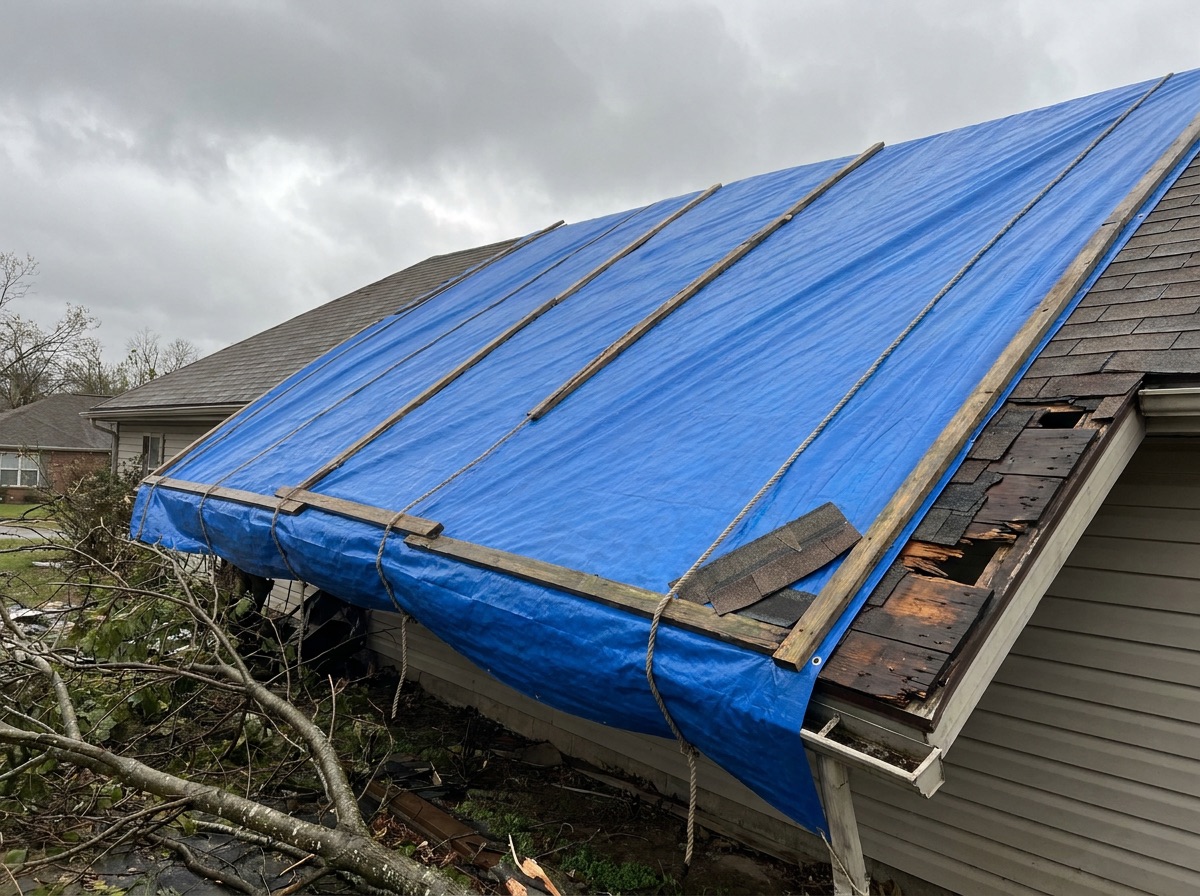
Emergency Roof Tarping in East Lake-Orient Park
An exposed roof after a storm lets water keep destroying your home. Storm Damage 911 connects you with local roofing crews who install emergency tarps fast to stop the water while you arrange permanent repairs.
Roof Tarping in East Lake-Orient Park
Free, no obligation. We match you with up to two licensed, insured local pros so you can compare.
- Licensed pros
- Free, no spam
- One call, not eight
Got it. You are in good hands.
A vetted local pro will reach out shortly. For an active emergency, call us now at (813) 555-0911.
Roof Tarping after storms in East Lake-Orient Park
Hillsborough County sits at the head of Tampa Bay and faces a compounded storm-damage profile: hurricane-force winds and tropical storm gusts peel roofing, shatter windows, and down trees, while storm surge from direct or near-miss Gulf landfalls can push 7 or more feet of saltwater inland along coastal and river corridors. The 2024 season delivered a one-two punch - Hurricane Helene's record surge caused $1.8 billion in residential damage countywide, followed two weeks later by Hurricane Milton's 16-18 inches of rainfall that drove the Hillsborough River to an all-time record crest of 38 feet, flooding neighborhoods that had never flooded before. Inland areas including Plant City face rapid-onset riverine and stormwater flooding from tropical rain events, while the entire county sits within NOAA-designated surge evacuation zones that were expanded after 2024 to reflect the compounding risk of simultaneous wind, surge, and inland flooding.
That is why matching with a pro who actually works in Hillsborough County matters. The roof tarping specialists in our East Lake-Orient Park network are licensed for this trade, insured, and locally rated, and they give you a free, written assessment with no obligation.
Emergency roof tarping is the immediate deployment of heavy-duty polyethylene or reinforced tarp material over storm-damaged, wind-compromised, or impact-breached roof sections. Its purpose is narrow and time-critical: stop active water intrusion until a permanent repair or full replacement can be scheduled and completed. Contractors secure tarps using a sandwich-board method - tarp edges are clamped between pairs of 2x4 lumber boards nailed into the roof decking - creating a watertight seal that resists wind uplift. A properly installed tarp extending at least four feet beyond the damaged area on every side provides reliable protection for 30 to 90 days. In Florida, where hurricane and tropical storm events create high-volume demand, rapid response is essential to meet the state's legal duty to mitigate further damage. In Illinois, hail events and severe convective storms drive the majority of emergency tarping calls. In both states, prompt professional tarping directly supports a homeowners insurance claim by demonstrating the homeowner took reasonable steps to prevent additional loss.
The processHow emergency roof tarping in East Lake-Orient Park works, step by step
- Initial damage assessmentThe contractor inspects from the ground first, then accesses the roof safely using appropriate fall-arrest equipment. They identify all breach points - missing shingles, punctures from falling limbs, lifted flashing, collapsed decking - and assess structural stability before any person walks the damaged section.
- Interior inspection and water trackingThe crew checks the attic space to map where water has already entered. This step confirms the actual breach location, which is often not directly above visible interior water staining, and identifies saturated insulation or compromised structural members that affect where the tarp must extend.
- Measurement and material selectionThe affected area is measured and the tarp is sized to extend a minimum of four feet beyond every edge of the damaged zone, including at least four feet over the roof ridge if the damage is near the peak. For Florida and Illinois storm conditions, a minimum 12-20 mil UV-treated polyethylene tarp is standard. Heavier 20 mil tarps are used for extended exposure or high-wind environments.
- Debris removal and surface preparationLoose shingles, broken branches, and debris are cleared from the work area. Any protruding fasteners or sharp edges that could puncture the tarp from below are addressed. This step prevents premature tarp failure and ensures a flush contact surface.
- Tarp installation using the sandwich-board methodThe tarp is laid over the damaged area and pulled taut. Along each edge, the tarp is folded over a 2x4 board and a second 2x4 is placed on top, creating a sandwich. The assembly is fastened into the roof decking with screws or ring-shank nails every 12-18 inches. At the ridge, the tarp is carried over and secured on the opposite slope to prevent wind from lifting it.
- Edge and penetration sealingEdges at eaves, rakes, and any roof penetrations (vents, chimneys, skylights) are sealed with roofing tape or caulk to prevent wind-driven water from entering underneath the tarp perimeter. This step is frequently skipped by untrained installers and is a primary cause of tarp failure.
- Documentation for insuranceThe contractor photographs all damage before and after tarp installation, with timestamps. Written documentation of the damaged area size, materials used, and installation method is provided to the homeowner. This package is the foundation of the emergency repair line item in the insurance claim.
- Load check and final walkthroughThe installed tarp is tested for tension and proper drainage slope. Any low points where water could pool and add structural load are corrected. The homeowner is briefed on the tarp's expected lifespan, signs of failure to watch for, and how to reach the contractor if the tarp shifts before permanent repairs are completed.
Cost factors
- Roof size and damage area. Pricing scales with the square footage needing coverage. A small breach covering 100-200 sq ft may cost $400-$600. A major damage zone covering 500+ sq ft on a large home typically runs $1,000-$2,500+.
- Roof pitch and accessibility. Steep-pitch roofs (above 6:12) require additional safety equipment, slower movement, and more labor time. Expect a 20-40% surcharge over flat or low-slope jobs. Multi-story homes add further height risk and typically carry a premium.
- After-hours and emergency dispatch. Calls placed nights, weekends, or during active storm events carry a mobilization premium of $100-$300 above standard rates. During declared storm emergencies in Florida, demand-surge pricing is common. Illinois hail season (April-September) creates similar availability constraints.
- Tarp material grade. Standard 10-12 mil polyethylene tarps are the economy option. Heavy-duty 16-20 mil UV-rated tarps cost more in materials but last 60-90 days versus 30-45 for lighter grades. For insurance documentation purposes, heavier material is generally recommended.
- Structural damage complexity. If decking boards are broken or rafters are compromised, the contractor must work around unstable surfaces and may need to add temporary structural blocking before the tarp can be safely anchored. This adds both labor time and materials cost.
- Debris removal scope. Large fallen limbs or significant debris on the roof increase prep time. Some contractors price debris removal separately at $150-$400 depending on volume. This is distinct from full debris haul-away after permanent repairs.
- Geographic market. Labor rates in coastal Florida markets (Miami, Tampa, Fort Lauderdale) and the Chicago metro area are higher than rural central Florida or downstate Illinois. Regional rate variation of 25-40% is typical across these markets.
Your options
- Standard polyethylene tarp (10-12 mil). The most widely used material for short-term protection. Lightweight, water-resistant, and widely available. Suitable for jobs where permanent repair can begin within 30 days. UV degradation limits useful life in Florida's sun exposure.
- Heavy-duty polyethylene tarp (16-20 mil). Reinforced cross-woven core laminated on both sides with polyethylene film. Resists wind uplift, UV degradation, and puncture significantly better than standard grades. Preferred for insurance-documented repairs and multi-month exposure windows.
- Woven polyethylene fabric (12-20 mil reinforced). Three-ply construction with a woven grid center. Tear-resistant and performs better in high-wind conditions typical of Florida hurricane aftermath. Often used by restoration contractors as a higher-quality deliverable.
- 2x4 lumber securing boards. The structural component of the sandwich-board fastening system. Pressure-treated lumber is preferred in Florida's humidity and Florida-specific coastal environments to resist rot during extended tarp periods.
- Roofing tape and sealant. Applied at tarp edges, penetrations, and seams to create a continuous water barrier. High-quality butyl or modified bitumen tape substantially reduces the failure rate at edge transitions compared to tarp alone.
When to call a pro
- Visible missing, lifted, or displaced shingles after a storm, wind event, or hail strike
- Active water dripping or staining visible on ceilings, walls, or in the attic immediately after or during rain
- Fallen tree limbs, branches, or other debris resting on the roof surface with suspected penetration
- Visible daylight through the roof deck when viewed from inside the attic
- Buckled, sagging, or deformed roof decking visible from inside or from the ground
- Storm-torn or detached flashing around chimneys, skylights, or roof-to-wall junctions
- Neighbor or insurer contact indicating your roof sustained visible damage during a storm event that has already been documented
How insurance typically works
Most standard homeowners insurance policies treat emergency roof tarping as a mitigation or emergency repair expense covered under dwelling protection, provided the damage was caused by a covered peril such as wind, hail, or falling objects. Insurers typically require that you document the damage, take reasonable steps to prevent further loss, and retain all receipts for emergency repair costs. In Florida, policyholders have 12 months from the date of loss to notify their insurer of a claim; Illinois policies vary by carrier and policy terms. The homeowner is responsible for paying their deductible - this is a contractual and legal obligation. Under Florida Statute 489.147, it is a third-degree felony for a contractor to waive, pay, or rebate a policyholder's insurance deductible in exchange for roofing work. The same conduct constitutes insurance fraud. Filing a claim that includes fabricated damage, inflated quantities, or work that was never performed is also illegal and can result in criminal prosecution. This note is educational only. Review your specific policy language, and contact your insurer directly with questions about your coverage, claim process, or deductible responsibility.
How to choose the right pro
- Verify the contractor holds an active Florida state-certified or state-registered roofing contractor license (for Florida work) or an active Illinois IDFPR roofing contractor license (for Illinois work). Both states maintain searchable online license verification portals.
- Confirm the contractor carries general liability insurance with at least $100,000 in coverage (Florida minimum) or $500,000 (Illinois minimum), plus workers' compensation. Request certificates of insurance naming you as the certificate holder.
- Ask specifically about their emergency response time. A legitimate emergency tarping provider should be able to give you an arrival window - typically 2-6 hours - not a next-day appointment after active weather.
- Ask what tarp thickness and material they use and why. A professional should be able to specify mil rating and explain why it is appropriate for your damage type and expected timeline to permanent repair.
- Request written documentation of the damage assessment and materials installed. This documentation is necessary for your insurance claim. If a contractor is unwilling to provide it, that is a red flag.
- Be cautious of unsolicited door-to-door contractors who appear immediately after a storm. While many are legitimate, storm-chasing fraud is common in both Florida and Illinois post-hurricane and post-hail markets. Independently verify license numbers before signing anything.
- Ask whether the contract includes the legally required language in Florida about insurance claims, deductibles, and the homeowner's obligation to contact their insurer before signing. Florida law requires this disclosure in 14-point bold font on all residential roofing contracts related to insurance claims.
What is warrantied
Emergency tarping is explicitly a temporary protective measure, not a permanent repair, and most contractors do not offer a structural or workmanship warranty on the tarp installation itself beyond a short-term performance period - typically 30 to 90 days, aligned with the expected useful life of the tarp material under normal conditions. The warranty, where provided, generally covers tarp failure resulting from faulty installation (loose boards, inadequate edge sealing) but excludes failure caused by additional storm events, vandalism, or conditions that occur after the initial install. The tarp and its installation are not a substitute for permanent roofing work and provide no warranty on the underlying roof structure. Warranties on the permanent repair that follows are entirely separate and governed by that contractor's workmanship guarantee and the manufacturer warranty on roofing materials used.
Avoid theseCommon mistakes
- Waiting too long to call - every hour of uncovered exposure allows water to penetrate roof decking, saturate insulation, and begin mold colonization in wall cavities. Calling at first light after a storm event is the correct response, not waiting to assess the damage yourself.
- Attempting DIY installation without proper fall protection - damaged roofs are structurally compromised and wet surfaces increase fall risk dramatically. Falls account for a significant share of residential roofing injuries, and an amateur on an unstable, wet roof after a storm is a preventable tragedy.
- Using an undersized tarp - covering only the visible hole is the most common installation error. Water travels laterally under decking and shingles. The tarp must extend at least four feet beyond every edge of the damaged area to intercept this lateral travel.
- Failing to document damage before the tarp is installed - photographs with timestamps of all damage, taken before any materials are applied, are the foundation of an insurance claim. Once the tarp is down, that evidence is gone.
- Signing a contract with a contractor who offers to waive your deductible - this is insurance fraud under Florida Statute 489.147 and similar fraud statutes in Illinois. The homeowner who accepts the offer can also face legal exposure. The deductible is always the homeowner's obligation.
- Neglecting to check that the contractor is actually licensed - storm events in Florida and Illinois attract unlicensed operators who move between markets. Verifying the license number on the state portal before signing takes under five minutes and is the single most protective step a homeowner can take.
Roof Tarping in East Lake-Orient Park: questions
Do you cover East Lake-Orient Park and nearby areas?
Yes. We match roof tarping requests across East Lake-Orient Park and all of Hillsborough County. The pro we connect you with is local and licensed to work in your area.
How fast can a roof tarping pro reach me in East Lake-Orient Park?
Because roof tarping is time-sensitive, our East Lake-Orient Park network crews prioritize it, typically the same day or next day after a storm.
How much does emergency roof tarping typically cost in Florida and Illinois?
For a standard single-story residential home with moderate storm damage, most jobs fall in the $600-$1,200 range. Small repairs on accessible roofs can run as low as $400. Large damage areas, steep pitches, after-hours response, or storm-surge demand can push costs to $2,500 or more. Emergency response during a declared storm event typically carries an after-hours or mobilization premium of $100-$300 over standard rates.
Does homeowners insurance pay for emergency roof tarping?
Generally yes, when the underlying damage is caused by a covered peril such as wind, hail, or a falling object. Insurers treat tarping as a required mitigation expense under the dwelling coverage section. Keep all receipts and contractor documentation. Contact your insurer promptly - Florida policyholders have 12 months from the date of loss to file a claim notification. Review your specific policy for coverage limits and deductible obligations.
How long will a roof tarp last before I need a permanent repair?
A properly installed heavy-duty tarp (16-20 mil polyethylene) provides reliable protection for 60 to 90 days under normal weather conditions. Standard 10-12 mil tarps are rated for approximately 30 to 45 days. UV exposure in Florida degrades lighter tarps faster. The tarp is a bridge measure - schedule your permanent repair before the tarp's rated lifespan expires.
Do I need a licensed contractor for emergency tarping in Florida?
Yes, under normal circumstances. Florida requires a state-certified or state-registered roofing contractor license under Chapter 489 for roofing work. Section 489.103(6) provides a narrow exemption for non-permanent emergency tarps installed during a declared state of emergency. This exemption is situation-specific and does not cover all storm events. For most jobs, you should verify the contractor holds an active license through the Florida DBPR license portal.
Do I need a licensed contractor for emergency tarping in Illinois?
Yes. Illinois requires a state roofing contractor license under the Illinois Roofing Industry Licensing Act, administered by IDFPR. Emergency tarping is classified as roofing work under the Act and is not exempt. Contractors working on 1-8 unit residential properties need at minimum a Limited Roofing License. Verify the license through the IDFPR online lookup before authorizing work.
Is it safe to tarp my own roof after a storm?
It carries significant risk and is not recommended for most homeowners. Damaged roof decking may be structurally unstable. Wet or debris-covered surfaces substantially increase fall risk. A proper professional installation requires fall-arrest equipment, specific fastening hardware, and experience identifying where lateral water travel requires the tarp to extend. The cost of a professional installation is modest relative to the risk of a serious fall injury or a failed DIY tarp that allows continued water intrusion.
What size tarp do I need for my roof damage?
The tarp must extend a minimum of four feet beyond every edge of the damaged area, including over the roof ridge if the breach is near the peak. A small puncture from a fallen branch still requires a substantially larger tarp to intercept lateral water travel under the surrounding shingles. Undersizing is the most common installation error and a primary cause of continued water intrusion after tarping.
Can a contractor waive my deductible if they do the tarping and then the full roof repair?
No. In Florida, waiving, paying, or rebating a policyholder's insurance deductible in exchange for roofing work is a third-degree felony under Florida Statute 489.147, punishable by fines up to $10,000 per violation and potential license revocation. Illinois fraud statutes similarly prohibit this conduct. The homeowner is responsible for their deductible in all circumstances. A contractor who offers to absorb your deductible as a sales tactic is committing insurance fraud, and accepting such an offer exposes the homeowner to legal risk as well.
What is the sandwich-board method contractors use to secure tarps?
The sandwich-board method is the professional standard for anchoring roof tarps against wind uplift. The tarp edge is laid over a 2x4 lumber board, then a second 2x4 is placed on top of the tarp, clamping it between the two boards. The assembly is fastened into the roof decking with screws or ring-shank nails every 12-18 inches. This distributes the load along the board length rather than concentrating it at grommet points, preventing the tarp from tearing free in high winds.
How quickly can a professional crew typically arrive after I call?
Under normal conditions, most emergency tarping contractors operate on a 2-6 hour response window. During active major storm events or in the immediate aftermath of a named hurricane in Florida, response times can extend to 12-24 hours or more due to demand surge and road access issues. Having a relationship with a local contractor before storm season provides faster access than cold-calling during peak demand.
What documentation should the contractor provide after tarping my roof?
You should receive: dated photographs of all damage before and after tarp installation, a written description of the damaged area (location on the roof, approximate square footage), the materials used (tarp size, mil rating, fastener type), and a receipt or invoice itemizing labor and materials. This documentation package is essential for your insurance claim. If the contractor does not offer it, request it explicitly before they leave.
Will a tarp protect my roof through another storm?
A properly installed heavy-duty tarp provides meaningful wind and rain resistance during subsequent weather events, but it is not a substitute for a permanent roof and has lower wind resistance than intact roofing. The tarp's boards and fastening points are most vulnerable to high sustained winds and wind-driven debris. After any subsequent storm, inspect the tarp visually for displacement, pooling water, or edge lifting, and contact your contractor immediately if you see signs of failure.
Can mold start growing while waiting for the permanent repair?
Yes. Mold can begin colonizing wet wood and insulation within 24 to 72 hours of water intrusion. A tarp that stops further water entry does not dry out materials that are already wet. If significant water entered the structure before tarping, the interior should be inspected for moisture and drying equipment considered. Delayed mold remediation substantially increases the total cost of the claim.
What is the difference between emergency tarping and a temporary roof repair?
Emergency tarping covers damage with a tarp anchored mechanically to the existing roof structure - no roofing materials are installed or removed, and the underlying damage is not addressed. A temporary repair may involve actually replacing a limited number of shingles, sealing specific breach points with roofing cement, or installing peel-and-stick membrane over small openings. Temporary repairs are more durable but also more expensive and require more time to complete. Tarping is appropriate when speed and cost are the priority and permanent repair is planned within 30-90 days.
Should I call my insurance company before or after getting the tarp installed?
Notify your insurer as soon as reasonably possible, but do not delay tarping while waiting for an adjuster. Most policies require you to take prompt action to mitigate further damage - waiting for adjuster approval before tarping can weaken your claim if additional water damage occurs in the interim. Document all damage with photographs before the tarp goes on. Then notify your insurer, provide the documentation, and submit your receipts for the tarping as an emergency mitigation expense.