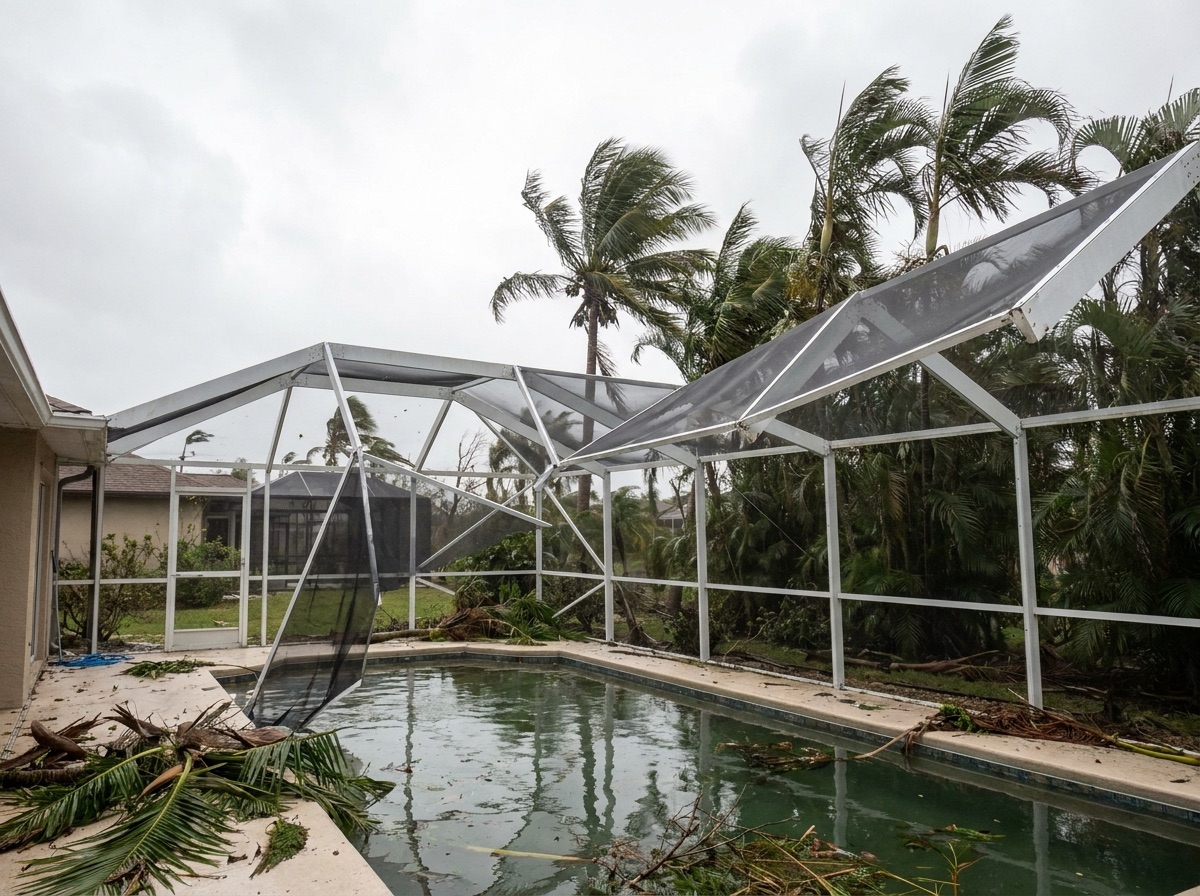
Lanai Screen Repair in Fort Lauderdale
Repair of screened lanai panels, frames, and doors. We connect Fort Lauderdale homeowners with vetted, licensed local pros, free.
Lanai Repair in Fort Lauderdale
Free, no obligation. We match you with up to two licensed, insured local pros so you can compare.
- Licensed pros
- Free, no spam
- One call, not eight
Got it. You are in good hands.
A vetted local pro will reach out shortly. For an active emergency, call us now at (813) 555-0911.
Fort Lauderdale homeowners turn to lanai screen repair after the storms that hit Broward County. Here is exactly what the work involves, what it costs, and how to get matched with a local pro.
Lanai screen repair covers fixes to the screened enclosure attached directly to the back of a Florida home - the covered, screened living space that sits between the interior and the pool cage or open yard. Lanai enclosures differ from freestanding pool cages in that they are structurally tied to the house fascia and roof overhang, which creates unique failure modes: water infiltration where the frame meets the roofline, screen panels that are larger and more wind-exposed than pool cage wall panels, and frame corrosion accelerated by moisture trapped between the enclosure and the house wall. Repairs range from replacing a single torn panel to re-framing sections where the aluminum has separated from the fascia or concrete, installing new spline throughout, and addressing door hardware that has failed under Florida humidity. Most lanai screen repairs do not require a building permit unless structural frame replacement is involved.
When you need itSigns you need this service
- One or more screen panels have tears, punctures, or are fully blown out after a storm or wind event
- The screen fabric has sagged away from the spline channel or is visibly loose across multiple panels
- Water is entering the lanai through gaps where the frame meets the home's fascia or roofline
- Aluminum frame rails show visible corrosion, bowing, or sections that have separated from wall or fascia anchors
- Screen doors on the lanai are not closing fully, dragging on the frame, or have damaged hardware
- The existing screen has turned chalky or brittle and lets in small insects despite no visible tears
How it works
- Damage assessment and panel inventoryThe contractor inspects every panel of the lanai enclosure - walls, roof sections if screened, and door openings - and documents which panels need replacement versus which frames need repair. The attachment points where the frame meets the house fascia, soffit, and concrete slab are checked for separation or corrosion.
- Frame repair (if needed)Any aluminum extrusions that are bent, cracked, or have separated from anchor points are repaired or replaced before new screen is installed. Sections that have pulled away from the fascia are re-anchored using appropriate fasteners and sealant. Frame repair is quoted and completed before screen work proceeds.
- Screen removal and channel cleaningOld screen fabric and spline are removed from affected panels. The aluminum channels are cleaned of debris, old spline residue, and oxidation so new spline seats flush. For full lanai rescreenings, all panels are stripped in sequence.
- New screen installationFresh screen mesh is cut to each panel opening, seated in the channel, and rolled under tension using a spline roller. Tension must be uniform - the larger panel dimensions common on lanai walls make proper tensioning especially important to prevent sagging. New rubber spline locks the screen in place on all four sides.
- Door and hardware checkScreen door operation is tested - hinges, closers, latches, and frame alignment are all checked. Any hardware that is stiff, corroded, or non-functional is replaced at this stage rather than separately.
- Sealant and final inspectionSeams where the lanai frame meets the house structure are inspected and re-caulked if needed to prevent water infiltration. The contractor walks every panel from inside and outside to confirm tension, spline seating, and that no gaps exist at corners or frame connections.
What it costs
Single-panel lanai repairs typically cost $50-$200 per panel depending on panel size, screen material, and whether the frame needs work. A full lanai rescreening covering 400-800 square feet of screen area runs $500-$3,000, with the wide range driven by enclosure size, screen material selected, and extent of frame repair needed. Lanai panels are often larger than standard pool cage wall panels, which increases both material cost and the skill required to achieve proper tension. In coastal Southwest Florida markets, post-storm labor demand frequently adds a 15-25% premium over base rates.
Lanai Repair in Fort Lauderdale: questions
Do you offer lanai repair in Fort Lauderdale?
Yes. We connect Fort Lauderdale homeowners with vetted, licensed local pros for lanai screen repair, with a free assessment and no obligation.
How fast can someone help with lanai repair in Fort Lauderdale?
For Fort Lauderdale and the surrounding Broward County area, our network pros prioritize storm work and typically respond same-day or next-day for urgent needs.
What makes lanai screen repair different from pool cage screen repair?
The primary differences are structural attachment and panel geometry. A lanai is attached to the house at the fascia and roofline, creating connection points that can fail separately from the screen itself - water infiltration, fascia separation, and roof-line gaps are lanai-specific failure modes. Lanai screen panels also tend to be larger than pool cage wall panels, which makes proper tensioning more technically demanding. The work is similar in materials and tools, but a contractor who specializes in lanais understands the house-to-frame interface that pool cage work does not involve.
Can lanai screen repair be done in sections, or do I need to rescreen the whole thing at once?
Repairs can absolutely be done in sections - if only two panels were torn in a storm, those two panels can be replaced independently. That said, if your existing screen is more than 7-10 years old and showing signs of brittleness or UV degradation across most panels, patching a few panels now and rescreening others in a year or two ends up costing more than a full rescreening done in one mobilization. A good contractor will tell you honestly which approach makes economic sense given the age and condition of the rest of the screen.
Is the area where the lanai frame meets my house roofline a common problem point?
Yes, it is one of the most common failure points on Florida lanais. The junction between the aluminum frame header and the home's fascia board or soffit is subject to differential movement, water infiltration, and accelerated corrosion where two dissimilar materials contact each other. Over time, the sealant at this joint cracks and allows water to work behind the fascia, leading to wood rot and frame separation. This junction should be inspected annually and re-caulked with a paintable polyurethane or silicone sealant appropriate for aluminum-to-wood contact.
My lanai screen was damaged during a storm. What should I do first?
Photograph all damage thoroughly from multiple angles before touching anything - this is important documentation if an insurance claim is involved. If torn panels are creating large openings that invite pest intrusion or weather exposure, a temporary fix with mesh tape or a plastic sheeting patch can protect the space while you wait for a contractor. Contact two or three licensed screen contractors for quotes, provide them with your damage photos in advance, and ask each one to give you a written itemized estimate that separates screen work from any frame repair work.
What screen material is best for a lanai that gets heavy afternoon sun?
For high-sun exposure, a solar-shade or sun-control screen is worth considering alongside standard insect screen. Solar screen mesh blocks 80-90% of solar heat and UV while still allowing air flow and visibility - it reduces the temperature inside the lanai noticeably on west-facing exposures. The tradeoff is reduced outward visibility compared to standard screen, and it costs roughly 20-40% more than fiberglass mesh. If the lanai is on the north or east side and shaded, standard polyester mesh provides excellent durability without the added cost of solar screen.
How do I find a reputable lanai screen repair contractor in Florida?
Verify that the contractor holds a current Florida license - either a state-issued aluminum contractor license or a local county occupational license for screen work, depending on the scope. Confirm they carry general liability insurance and workers' compensation. Look for contractors who provide written estimates itemizing materials and labor separately, and who can name the screen material brand and grade they will use. Ask for two or three recent references in your specific area. Be cautious of door-to-door solicitors who appear immediately after a storm offering steep discounts - this is a known pattern of unlicensed contractor fraud in Florida.
How long does lanai screen typically last in Florida?
Standard fiberglass screen on a Florida lanai typically needs replacement every 5-10 years, with shorter life on south- and west-facing exposures that receive more direct sun. Polyester screen lasts 15-20 years under the same conditions. Pet-resistant vinyl-coated polyester is the most durable option for households with dogs or cats and is worth the premium if animals regularly press against or scratch the screen. Annual rinsing with a garden hose to remove pollen and salt residue is the single most effective maintenance step for extending screen life.
Does frame corrosion on a lanai need to be addressed before rescreening?
Yes - installing new screen on a corroded or structurally compromised frame is money wasted. Corrosion pitting that has eaten through the wall of an aluminum extrusion means the channel can no longer hold spline tension properly, and the screen will pull out faster. Surface oxidation that looks powdery or chalky but has not perforated the metal can be cleaned and treated; through-wall pitting requires section replacement. Have any frame sections in question assessed before the rescreening quote is finalized so frame repair is included in the scope rather than discovered mid-job.
What is the going rate for a full lanai rescreening in Southwest Florida?
For a mid-size lanai in the 300-500 square foot screen area range, full rescreening with standard fiberglass or polyester mesh typically runs $800-$2,000 in Southwest Florida markets including Cape Coral, Fort Myers, Naples, and Sarasota. Larger lanais, premium screen materials, or those requiring frame repair before screen work push costs higher. Post-storm periods in 2024 and 2025 saw contractor rates running 15-25% above pre-storm norms in the hardest-hit Southwest Florida counties, so timing relative to storm season affects actual pricing.
Can I repair a small tear in my lanai screen myself?
Small punctures under about two inches can be patched with fiberglass screen repair tape as a temporary fix - it is not weatherproof long-term but will keep insects out for a few months. For anything larger, or for tears near the spline channel where the screen has pulled free of the frame, professional re-splineing is the correct fix. DIY spline installation is achievable for a handy homeowner with the right tools and materials for a standard rectangular panel, but larger lanai panels require consistent tension across a wider span that is difficult to achieve without experience.