Stump Grinding & Removal in Naperville
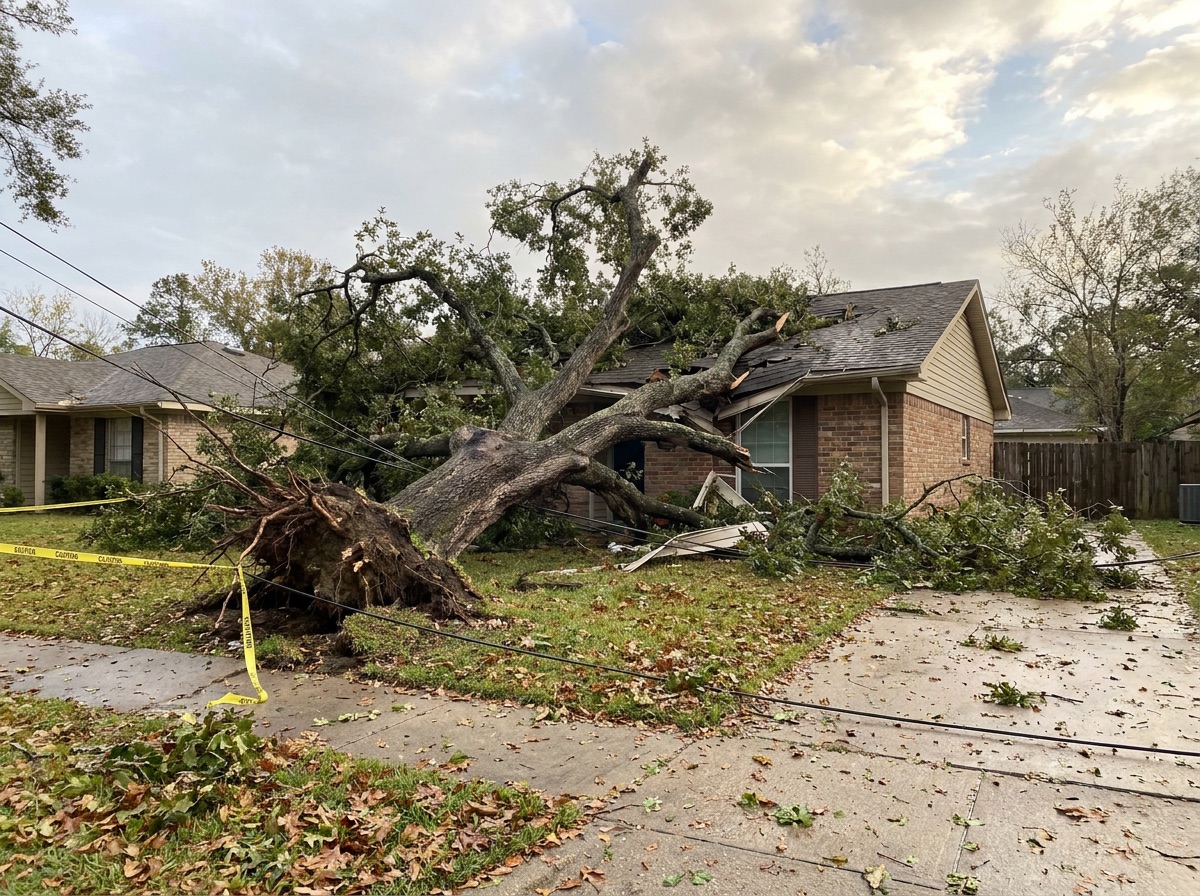
Grinding and removal of stumps left after storm tree loss. We connect Naperville homeowners with vetted, licensed local pros, free.
Stump Grinding in Naperville
Free, no obligation. We match you with up to two licensed, insured local pros so you can compare.
- Licensed pros
- Free, no spam
- One call, not eight
Got it. You are in good hands.
A vetted local pro will reach out shortly. For an active emergency, call us now at (813) 555-0911.
Naperville homeowners turn to stump grinding & removal after the storms that hit DuPage County. Here is exactly what the work involves, what it costs, and how to get matched with a local pro.
Stump grinding is the mechanical reduction of a remaining tree stump - left after storm tree loss or scheduled removal - to wood chips using a rotating cutting wheel. A stump grinder removes the above-ground portion and grinds several inches below grade, eliminating the trip hazard and the visual obstruction. It does not extract the full root system, which continues to decay naturally underground over several years. In Florida's sandy and limestone soils, stumps from palms, live oaks, and slash pines are common post-storm remnants. In Illinois, stumps from silver maples, cottonwoods, and elms are typical. The resulting wood chip fill is left in the hole, can be used as mulch, or is hauled away depending on homeowner preference. It is a distinct service from emergency tree removal and is almost always scheduled as a follow-up job.
When you need itSigns you need this service
- A tree was removed during or after a storm and the stump was left flush or above grade
- An old stump is creating a mowing obstacle or tripping hazard on the lawn
- The stump is sprouting new shoots from the root collar and the growth needs to be stopped
- You plan to replant, lay sod, or install hardscaping in the area and the stump is in the footprint
- The stump is decaying and has become a host for wood-boring insects that could spread to other trees or structures
- The homeowner's insurance settlement or contractor scope of work requires a clear site before repair crews can work the area
How it works
- Site preparation and utility clearanceBefore grinding begins, the area around the stump must be clear of rocks, metal debris, and surface roots that could damage the machine. The operator calls 811 (the national dig-safe line) if subsurface utility lines may be in the grinding zone, particularly relevant in established residential neighborhoods in both Florida and Illinois.
- Access and equipment stagingStump grinders range from walk-behind units that fit through a standard gate opening to large tracked machines for stumps over 30 inches in diameter. The operator selects equipment based on stump size and site access - a backyard stump accessible only through a 36-inch gate requires a different machine than a front-yard stump beside a driveway.
- Progressive grinding passesThe operator makes overlapping passes with the cutting wheel, working from the outside of the stump toward the center and progressively deepening each pass. Most residential stumps are ground 6-12 inches below grade, which is sufficient to allow grass to grow over the site. Deeper grinding (12-18 inches) is needed if you plan to lay a concrete pad or plant a new tree.
- Surface root grindingVisible surface roots extending from the stump are ground to grade as part of the job scope. Confirm with the operator how far the grinding will extend along surface root runs - some companies include roots to 6-8 feet from the stump face; others require a separate line item for extended root grinding.
- Chip managementGrinding produces a significant volume of wood chips and soil mix. The operator fills the ground-out hole with the chip mix. Excess chips can be spread as mulch on beds (if requested), piled for homeowner use, or loaded and hauled away. Haul-away is typically a separate add-on charge of $50-$150.
- Site cleanupThe operator blows or rakes chips off surrounding lawn and hardscape. The finished site is a mulch-filled depression at or slightly below grade. It will settle over several weeks as the chip mix compacts; adding topsoil and overseeding a few weeks after grinding produces the cleanest result.
What it costs
Stump grinding costs $131 to $600 for most residential stumps, with the national average around $272 per stump. Florida pricing for a typical residential stump (Orlando area) runs $158 to $450, averaging around $313. Many companies use a per-inch-diameter rate of $2 to $5 per inch measured at ground level. Hardwood stumps (oak, elm, maple) cost more than softwood or palm because hardwood resists the cutting wheel and wears the machine faster. Multiple-stump jobs almost always carry a per-unit discount because mobilization is the largest fixed cost.
Stump Grinding in Naperville: questions
Do you offer stump grinding in Naperville?
Yes. We connect Naperville homeowners with vetted, licensed local pros for stump grinding & removal, with a free assessment and no obligation.
How fast can someone help with stump grinding in Naperville?
For Naperville and the surrounding DuPage County area, our network pros prioritize storm work and typically respond same-day or next-day for urgent needs.
What is the difference between stump grinding and full stump removal?
Stump grinding mechanically reduces the above-ground stump and the top several inches of root mass to wood chips using a spinning cutting wheel. The root system below that depth remains in the ground and decays over 5-15 years depending on species and soil conditions. Full stump removal - excavating the entire root ball - is rarely done on residential properties because it requires an excavator, creates a large hole, and is significantly more expensive. For most post-storm situations, grinding is the practical and cost-effective solution.
Will the stump sprout new growth after grinding?
For most hardwood species - oaks, maples, elms - grinding destroys the root collar and prevents regrowth. Some species, particularly cottonwood, poplar, and certain ornamentals, can send up suckers from lateral roots even after grinding. If regrowth is a concern for a specific species, ask the operator whether a stump treatment (application of a systemic herbicide to the fresh-ground surface) is advisable. This is a common add-on service.
How deep does the stump need to be ground for sod or replanting?
Standard grinding depth of 6 inches below grade is adequate for grass reestablishment. If you plan to install sod over the site, 8-10 inches is preferable to ensure the chip fill settles without creating a visible depression. For replanting a new tree in the same location, 12-18 inches of grinding depth is recommended to reduce root competition and disease transfer between the old and new root systems.
Can stump grinding damage my underground utilities or irrigation system?
Yes, this is a real risk. Stump grinders operate below grade and can contact irrigation lines, low-voltage landscape wiring, and in rare cases, shallow gas or water lines. Always call 811 before grinding - this free service marks the location of buried public utilities. Note that 811 does not mark private irrigation or landscape lighting; you or your irrigation contractor should flag those lines before the operator starts.
What do I do with the wood chip pile left after grinding?
The chips are a usable resource. They work well as mulch in planting beds, where a 3-4 inch layer suppresses weeds and retains moisture. However, fresh wood chips are high in carbon and can temporarily tie up soil nitrogen if tilled into a planting area - spread them on top rather than mixing them in. Alternatively, have the company haul them away for a typical add-on fee of $50-$150. The chips in the stump hole itself should be left to fill and compact naturally.
Is stump grinding included in emergency tree removal after a storm?
Almost never. Emergency tree removal is scoped to extract the hazard and restore safe access - the stump is cut flush to grade or slightly below, and the grinding is left as a separate job. Bundling stump grinding into the original emergency call is possible but uncommon because grinders are not standard equipment on emergency removal trucks. Book it as a follow-up once the site is cleared.
How long does stump grinding take for a typical residential stump?
A single stump from a medium-sized tree (18-24 inch diameter) typically takes 30-60 minutes of active grinding time. A very large oak stump (36-48 inches or larger) can take two to three hours. Multi-stump jobs are priced per unit but run more efficiently per stump because setup and mobilization are shared across all stumps in the visit.
Do I need a permit to have a stump ground in Florida or Illinois?
In most residential situations, stump grinding does not require a separate permit because the tree has already been removed. However, if the original tree removal required a permit - particularly in Florida municipalities that regulate the removal of protected species or trees over a certain diameter - confirm that your tree removal permit covers the associated stump work. Some municipalities treat stump grinding as complete only when the stump is fully below grade; verify local requirements with your city or county arborist.
My stump is very old and already partially decayed. Does that make it cheaper or harder to grind?
Partially decayed stumps are generally faster and easier to grind because the wood fiber has already begun to soften. In most cases, this reduces the time and therefore the cost of the job. The exception is a stump that has become a home for a large wasp, hornet, or yellowjacket colony - in that case, pest treatment should precede grinding to protect the operator.
Can I rent a stump grinder and do this myself?
Walk-behind stump grinders are available at most tool rental centers for $150-$300 per day. For a homeowner with a small, accessible stump on open lawn, this is viable. The practical limits are: rental machines are significantly less powerful than professional units and struggle with large or hardwood stumps; the work is physically demanding and kickback from the cutting wheel is an injury risk without experience; and most rental units do not grind deep enough for replanting purposes. For stumps over 18 inches in diameter or in proximity to structures, professional equipment is worth the cost.