Pool Cage Rescreening in Orlando
Replacing torn screen panels on pool cages and lanais. We connect Orlando homeowners with vetted, licensed local pros, free.
Pool Cage Rescreen in Orlando
Free, no obligation. We match you with up to two licensed, insured local pros so you can compare.
- Licensed pros
- Free, no spam
- One call, not eight
Got it. You are in good hands.
A vetted local pro will reach out shortly. For an active emergency, call us now at (813) 555-0911.
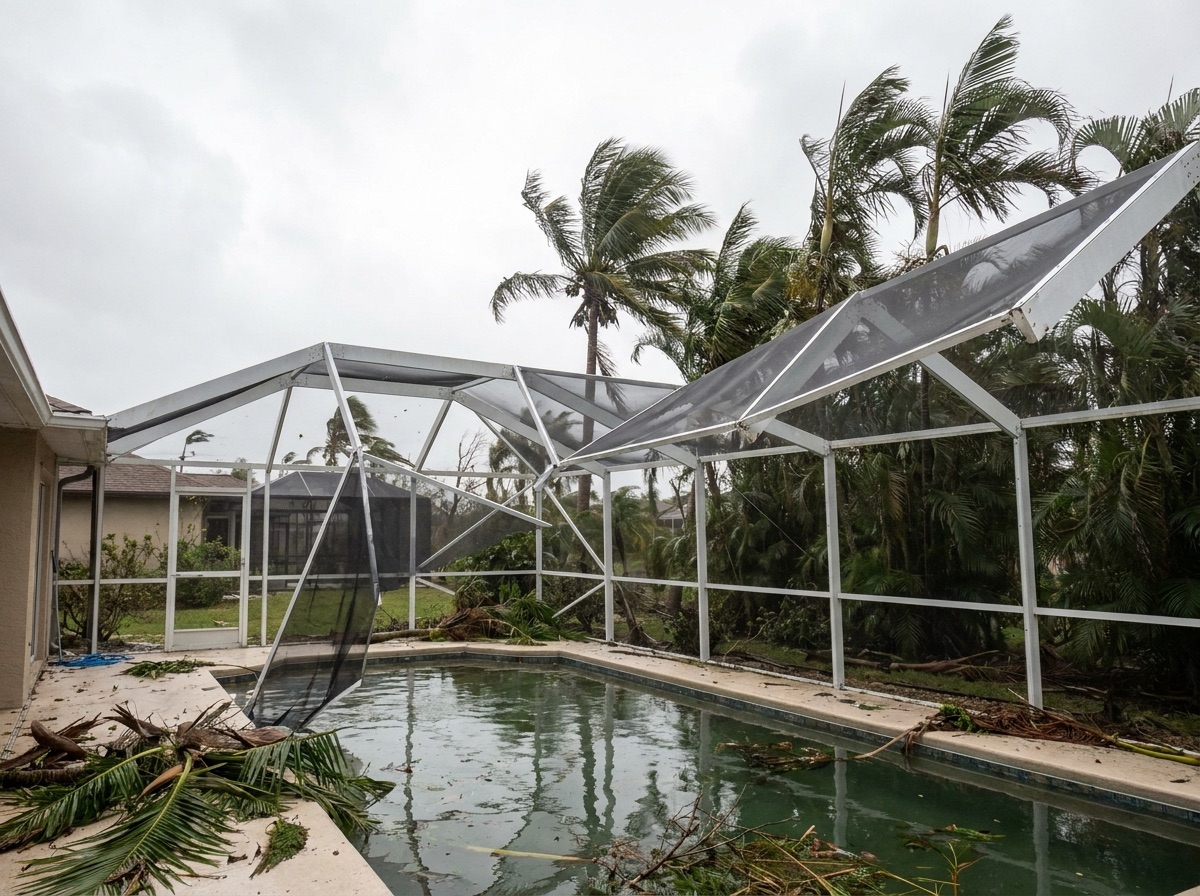
Orlando homeowners turn to pool cage rescreening after the storms that hit Orange County. Here is exactly what the work involves, what it costs, and how to get matched with a local pro.
Pool cage rescreening is the process of removing and replacing the screen fabric across some or all panels of an existing pool enclosure while the aluminum frame remains intact and in good condition. In Florida, UV exposure, salt air, and hurricane-force winds degrade screen mesh faster than nearly anywhere else in the country. Fiberglass, polyester, and aluminum mesh each carry different durability profiles - fiberglass lasts roughly 5-7 years in full Florida sun, while polyester can run 15-20 years. A full rescreening typically covers every panel on the roof and walls of the cage in a single mobilization, which is more cost-effective than repeated single-panel repairs. Contractors remove old spline and screen, clean the frame channels, install new mesh, and re-spline each panel under tension. The frame is inspected during this process, and any minor frame damage is noted for separate repair.
When you need itSigns you need this service
- Multiple panels show tears, holes, or visible sagging after a storm
- Screen mesh has turned chalky, brittle, or discolored from UV degradation
- You can see daylight through holes that are letting in insects or debris
- The existing screen is original to a home more than 7-10 years old and has never been replaced
- Rust staining or oxidation appears on the screen fabric near the frame channels
- A single-panel repair quote is approaching 50% of the full rescreening cost
How it works
- Inspection and material selectionThe contractor walks the cage and documents torn, missing, or degraded panels. You choose a screen material - standard fiberglass, polyester, solar-shade, or pet-resistant mesh - based on budget, sun exposure, and household needs. The quote locks in the material grade and panel count.
- Frame condition checkBefore any screen is pulled, the aluminum frame is checked for bent rails, corrosion, loose fasteners, and damaged gutter channels. Any frame repairs needed are quoted separately so they can be addressed before the new screen is installed.
- Old screen and spline removalWorkers remove the rubber spline from each channel, pull out the old screen fabric, and clean the aluminum grooves. Debris, oxidation, and old spline residue are cleared so new material seats flush.
- New screen installationFresh screen fabric is cut to size, laid across each panel opening, and pressed into the channel with a rolling spline tool. Proper tension is critical - too loose and the screen sags; too tight and it pulls out of the channel in the next storm.
- Spline set and trimNew rubber spline is seated into the groove on all four sides of each panel, locking the screen under tension. Excess screen fabric is trimmed flush with a utility knife, and corners are checked for gaps.
- Final walkthrough and cleanupThe contractor does a full visual inspection from both inside and outside the cage, checking tension, spline seating, and any panels that need re-tensioning. Debris and old material are removed from the pool deck.
What it costs
The primary driver is enclosure size - a 400-square-foot cage runs roughly $1,200-$1,800 while a 1,000-square-foot structure can reach $3,500-$4,500 or more. Screen material grade matters significantly: standard fiberglass costs $0.75-$1.25 per square foot while polyester or solar-shade mesh runs $1.50-$2.50 per square foot installed. Post-storm demand surges in Southwest and Central Florida drive labor rates higher, so scheduling rescreening before peak season typically saves 15-20% over emergency post-storm pricing.
Pool Cage Rescreen in Orlando: questions
Do you offer pool cage rescreen in Orlando?
Yes. We connect Orlando homeowners with vetted, licensed local pros for pool cage rescreening, with a free assessment and no obligation.
How fast can someone help with pool cage rescreen in Orlando?
For Orlando and the surrounding Orange County area, our network pros prioritize storm work and typically respond same-day or next-day for urgent needs.
How long does a full pool cage rescreening take?
Most standard pool cage rescreenings are completed in one to two days. A two-person crew can rescreen roughly 500-600 square feet of panels per day. Larger cages or those with significant frame cleaning needed may run into a third day. Weather windows matter in Florida - contractors typically will not install screen in sustained winds above 15 mph because it affects tension.
What screen material holds up best in Florida's climate?
Polyester mesh is the most durable all-around choice for Florida. It resists UV degradation better than fiberglass, handles salt air well, and typically lasts 15-20 years compared to 5-7 years for standard fiberglass. The upfront cost is roughly 20-30% higher per square foot, but the longer replacement cycle makes it cost-effective over time. In coastal areas within a few miles of saltwater, polyester is especially worth the premium because aluminum mesh can pit and corrode.
Do I need to be home during the rescreening?
You do not need to be present for most of the work, but you should be available at the start for the contractor to walk you through the material selection and panel count, and at the end for the final walkthrough. Most crews work on the exterior of the cage and do not need interior access to the home. Make sure any pool equipment, furniture, or toys near the cage perimeter are moved back before the crew arrives.
Can I rescreen just a few damaged panels instead of the whole cage?
Yes, and this is common for isolated storm damage or a single tear. Single-panel repairs typically run $50-$150 per panel depending on size and material. However, if your existing screen is more than seven years old, mixing new and old screen creates a patchwork appearance and you will likely be rescreening again within a few years anyway. Many contractors advise a full rescreening when more than 20-25% of panels are damaged.
Will my homeowner's insurance cover rescreening after a storm?
Screen enclosures damaged by a named storm or severe weather event are often covered under the dwelling or other-structures portion of a Florida homeowner's policy, but coverage terms vary widely by policy and carrier. Document all damage with dated photographs before any cleanup, keep any contractor estimates and invoices, and report the damage promptly to your carrier. Whether your specific policy covers the claim and at what amount is a question for your insurance adjuster - this is general information only.
How do I know if my frame needs repairs before rescreening?
Walk the perimeter and look for bent or bowed aluminum rails, frame sections that have pulled away from the concrete or fascia, visible cracks in the aluminum extrusions, and corrosion pitting that has eaten through the metal. Any of these conditions should be addressed before new screen is installed - otherwise the screen will not tension properly or will pull out faster. A reputable rescreening contractor will identify frame issues during the initial inspection.
What is the difference between fiberglass, polyester, and aluminum screen?
Fiberglass is the most common and least expensive - flexible, easy to install, and corrosion-resistant, but it degrades faster under Florida UV and typically needs replacement every 5-10 years. Polyester is a step up in durability and UV resistance, with a firmer feel that holds tension better after installation. Aluminum screen is the strongest option and resists tearing well, but it is prone to corrosion in salt-air environments and can oxidize within a few years near the coast. Most Florida contractors recommend polyester as the best balance of cost and longevity.
Is a permit required to rescreen an existing pool cage in Florida?
In most Florida jurisdictions, replacing the screen fabric on an existing cage - without altering the frame - does not require a building permit. However, if any structural frame components are replaced or the cage footprint changes, a permit is typically required. Requirements vary by county and municipality, so your contractor should confirm permit status based on the specific scope of work and your local building department's current rules.
How soon after a hurricane should I schedule rescreening?
As soon as possible after the storm has passed and it is safe to have contractors on site. Screen damage leaves your pool exposed to debris, accelerates algae growth, increases insect pressure, and exposes the aluminum frame to moisture that speeds corrosion. Post-storm demand in Florida can push scheduling out by weeks or months, so contacting multiple contractors immediately after a storm gives you the best chance of a timely slot.
What maintenance extends the life of new pool cage screen?
Rinse the screen panels with a garden hose two to three times per year to remove pollen, salt, and organic debris. Avoid pressure washing directly on the screen fabric - high pressure damages the mesh and can pull spline from channels. Inspect spline seating once a year and have loose sections re-seated before a full panel blows out. Trim any nearby vegetation that presses against the screen, since constant abrasion tears the fabric faster than weather does.