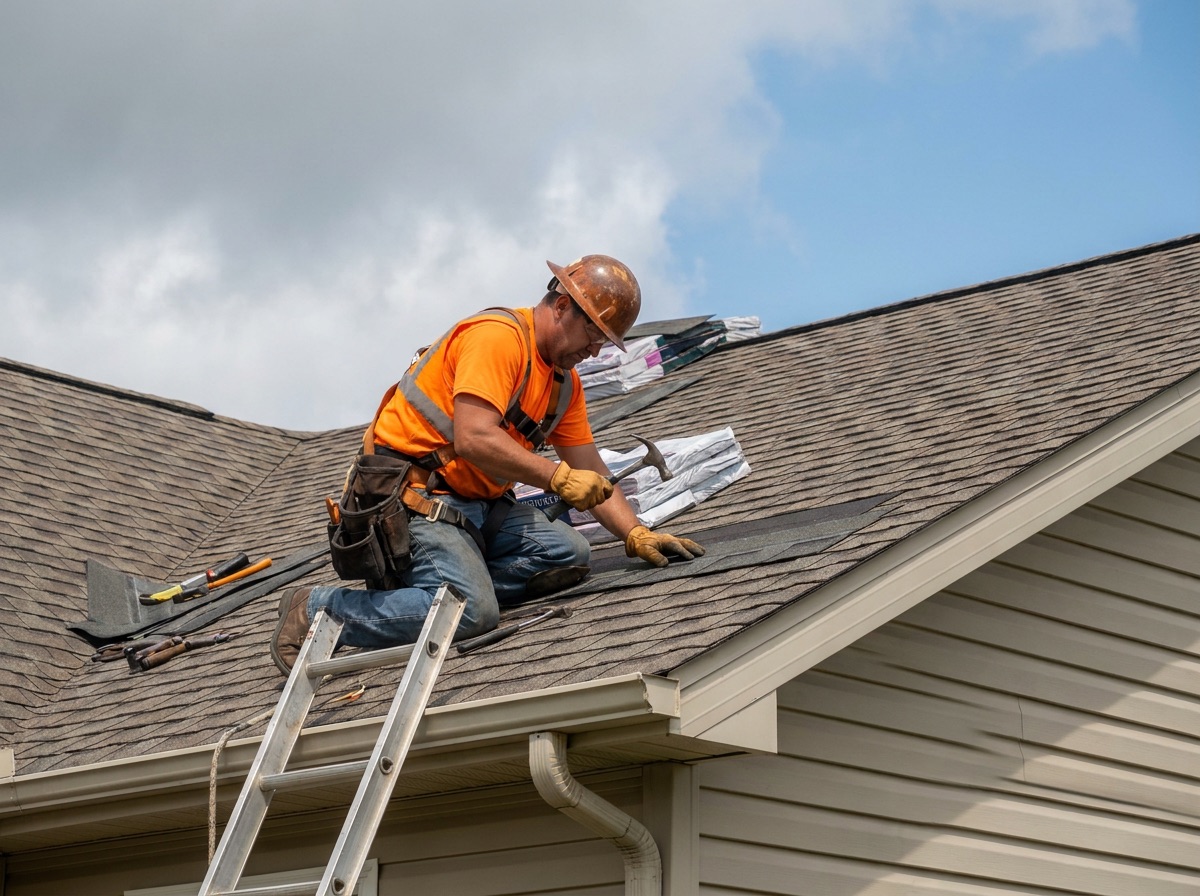
Roof Leak Repair
An active roof leak is not a scheduling problem - it is an emergency. Water entering through a compromised roof moves laterally through insulation, runs along framing members, and surfaces as ceiling stains or drips far from the actual entry point, which is why self-diagnosis is unreliable.
Get matched for roof leak repair
Free, no obligation. We match you with up to two licensed, insured local pros so you can compare.
- Licensed pros
- Free, no spam
- One call, not eight
Got it. You are in good hands.
A vetted local pro will reach out shortly. For an active emergency, call us now at (813) 555-0911.
An active roof leak is not a scheduling problem - it is an emergency. Water entering through a compromised roof moves laterally through insulation, runs along framing members, and surfaces as ceiling stains or drips far from the actual entry point, which is why self-diagnosis is unreliable. Storm events in Florida and Illinois create the conditions that reveal leaks that were developing for months: a hurricane pushes wind-driven rain against flashings that had minor gaps, hail opens hairline cracks in aging shingles, or windblown debris punctures a membrane that was already at end of life. Rapid professional response - leak detection, temporary protection, and permanent repair - is the difference between a $500 repair and a $15,000 mold remediation and structural restoration project. The leak source and the leak appearance are almost never in the same location.
When you need itSigns you need this service
- Water dripping from the ceiling or active staining visible on ceiling drywall during or after a storm
- Wet insulation discovered in the attic following a rain event
- Visible daylight through the roof deck when viewed from the attic
- Dark staining, streaking, or soft spots on attic decking boards
- Mold or mildew smell developing in upper-floor rooms after storm seasons
- Damp or bowing drywall on upper floors or at ceiling-wall joints following heavy rain
How it works
- Emergency Response and Temporary ProtectionThe first priority with an active leak is stopping ongoing water entry. A contractor deploys heavy-duty tarps secured at the ridge and weighted at the eaves to cover any confirmed or suspected breach areas. Temporary tarping is not a repair - it is damage control while the diagnostic and repair process is scheduled. Interior buckets, towels, and portable fans are deployed to manage immediate water accumulation.
- Attic Inspection and Trace-BackThe contractor begins leak diagnosis in the attic, not on the roof surface. Water traces back to the lowest visible wet spot, then follows the rafter or sheathing upward toward the likely entry point. Moisture meter readings map the extent of wet materials. In most cases, the attic inspection narrows the search area to a specific roof section or penetration zone before the contractor climbs to the exterior.
- Exterior Source IdentificationWith the interior trace-back complete, the contractor moves to the roof surface and inspects the identified zone. The most common leak sources are: pipe boot flashings (cracked rubber or open gaps), step and counter flashings at walls and chimneys (separated from substrate), valley metal (lifted or corroded), and at tile or shingle field damage immediately uphill from the interior wet spot. A water test - deliberate low-pressure wetting of suspect areas - is used to confirm the source before any repair begins.
- Scope DocumentationBefore repair begins, the contractor documents the confirmed source location, the repair method, any adjacent damage discovered during investigation, and any secondary damage areas found in the attic. This documentation matters if the damage extends to interior finishes that require separate contractor work.
- Permanent Repair ExecutionThe repair is executed based on the source type. A failed pipe boot is replaced with a new boot flashing compatible with the roof material. A separated step flashing is re-bent, re-fastened, and sealed. A cracked tile or compromised shingle is replaced. A membrane puncture is patched with compatible material and heat-welded or bonded. The repair is completed to a weathertight standard, not a temporary fix.
- Post-Repair VerificationAfter the repair is completed, the contractor verifies the fix through a water test or moisture meter re-check of the original wet areas. Interior staining and wet materials are assessed for remediation need. If drywall, insulation, or framing shows evidence of mold growth from prolonged exposure, the contractor flags it for the homeowner and recommends remediation before closing up the affected area.
What it costs
Most residential roof leak repairs fall between $300 and $1,900 depending on the source type and repair complexity. Simple pipe boot replacements run $150-$400. Flashing repairs at chimneys or walls run $400-$1,200. Storm-induced shingle field repairs run $300-$800. Emergency service calls outside business hours add $200-$500 in premium charges. The cost that matters more is the downstream cost of delay: in South Florida, a deferred leak that triggers mold remediation and decking replacement routinely runs $10,000-$25,000 - far exceeding the repair cost many times over.
Roof Leak Repair questions
Why is water dripping from my ceiling in a spot that has no roof penetration directly above it?
Water almost never travels straight down. It enters the roof at a penetration, seam, or breach, then follows the path of least resistance along the sheathing, insulation, or framing - sometimes traveling 6 to 15 feet horizontally before dropping to the ceiling. The ceiling stain is a symptom; the entry point is almost always uphill and upslope from where the water appears. This is why professional leak detection starts in the attic, tracing the moisture trail back toward the source rather than drilling through the ceiling at the drip point.
What are the most common roof leak sources after a Florida storm?
In order of frequency: (1) pipe boots - the rubber collar around plumbing vents degrades under UV and cracks, and wind-driven rain exploits those cracks; (2) step flashings at walls and dormers - mortar and caulk separate over time and wind pressure during storms drives water behind the flashing; (3) ridge cap damage - wind strips ridge cap shingles or cracks tile ridge mortar, exposing the highest and most vulnerable roof point; (4) valley metal - debris accumulation and standing water in valleys accelerates corrosion and seam failure; (5) HVAC penetrations - curb flashings on flat or low-slope roofs are a major commercial leak source after high winds.
How quickly does a roof leak cause mold growth?
Mold can begin to colonize wet building materials within 24 to 48 hours in warm, humid conditions - which describes Florida for most of the year. In Illinois summer months, the timeline is similar. Mold typically starts in insulation and on the back side of drywall paper, where it is invisible until growth is extensive. If a leak has been active for more than 48 hours in warm weather, a mold assessment of the affected area before closing up the repair is advisable. Treating visible mold found during repair is far cheaper than discovering concealed mold growth months later.
Is emergency roof repair after a storm more expensive?
Yes, for two reasons. First, most roofing contractors charge a service call premium for emergency response outside normal business hours - typically $200 to $500 above the standard repair cost. Second, post-major-storm demand spikes mean contractors are overwhelmed with calls, which drives up both price and wait times. That said, the premium for emergency repair is almost always justified by the avoided cost of ongoing water damage. Delaying repair to avoid the emergency surcharge while water continues to infiltrate the structure is rarely the economical choice.
Can I repair a roof leak myself temporarily before a contractor arrives?
For very minor, accessible situations - such as applying roofing cement around a visibly cracked pipe boot or placing buckets and towels in the attic - limited DIY mitigation is reasonable. Walking on a wet roof in storm conditions, however, is genuinely dangerous and is not recommended. Heavy-duty tarps can be applied from a ladder at the eave without walking the roof surface for small damaged areas. The realistic goal of homeowner action is damage containment, not repair. A licensed contractor should confirm the source and complete the permanent fix.
My roof is relatively new. How can it be leaking after just one storm?
New roofs can leak for several reasons that have nothing to do with material failure. Installation errors - improperly set pipe boots, inadequate flashing at walls, missing or misapplied sealant at penetrations - are the most common cause of early-life leaks. A storm event may be the first time wind-driven rain is pushed hard enough against a marginal flashing to reveal the deficiency. New material defects, though rarer, also occur. If your roof is within the workmanship warranty period (typically 1-5 years depending on contractor), the repair may be covered under that warranty - document everything and contact your contractor first.
What is the difference between a temporary tarp and a permanent repair?
A temporary tarp is installed over the suspected breach area to prevent ongoing water entry while a full diagnosis and repair is scheduled. Tarps are secured with screws at the ridge and weighted at the edges - they are not waterproof in wind-driven rain, they degrade in UV within days to weeks, and they do not address the underlying failure point. A permanent repair identifies the exact source, removes or repairs the failed component (flashing, boot, membrane, shingle), and restores the roof to weathertight condition with materials and methods designed to last. Never treat a tarp as anything other than a 48-to-72-hour stopgap.
How do contractors find roof leaks that are not obvious?
The standard diagnostic sequence is attic inspection first - moisture meters, visual trace-back along framing, and in some cases infrared thermal imaging to map the extent of wet materials. On the exterior, contractors use water testing: a helper inside the attic watches while the contractor runs water from a garden hose on specific zones in sequence, moving upslope to isolate the entry point. For flat roofs, electronic leak detection equipment is available that sends a low-voltage signal through the membrane and detects where current is escaping through breaches. Experienced contractors rarely need the electronic equipment for residential work - attic trace-back and systematic water testing locate the vast majority of leaks.
Does a roof leak repair require a permit?
In most Florida and Illinois jurisdictions, minor repair work - replacing a pipe boot, resealing flashings, replacing a handful of damaged shingles - does not require a permit. A permit is generally triggered when the scope of repair crosses into structural work (decking replacement beyond a threshold square footage) or when the project is classified as a re-roof rather than a repair. If your leak repair involves replacing a significant section of the roof, confirm with your contractor whether a permit is required for your specific municipality, since the threshold varies by jurisdiction.
Can a roof leak cause structural damage, and how quickly?
Yes. The timeline depends on the severity of the infiltration and the construction materials. Wood framing and OSB decking begin to soften and lose structural integrity after sustained exposure to moisture - progressive rot can develop within weeks in Florida's heat and humidity. Load-bearing ridge boards, rafters, and ceiling joists that are chronically wet become structurally compromised and may require sistering (adding new lumber alongside damaged members) rather than simple replacement. In a worst-case scenario - an undetected leak that infiltrates behind drywall, saturates insulation, and reaches framing over multiple rainy seasons - the structural remediation cost can exceed the original roof replacement cost. Early detection is not optional; it is the financial calculus.