Storm Debris Hauling in Tampa
Haul-away and disposal of storm debris and damaged materials. We connect Tampa homeowners with vetted, licensed local pros, free.
Debris Hauling in Tampa
Free, no obligation. We match you with up to two licensed, insured local pros so you can compare.
- Licensed pros
- Free, no spam
- One call, not eight
Got it. You are in good hands.
A vetted local pro will reach out shortly. For an active emergency, call us now at (813) 555-0911.
Tampa homeowners turn to storm debris hauling after the storms that hit Hillsborough County. Here is exactly what the work involves, what it costs, and how to get matched with a local pro.
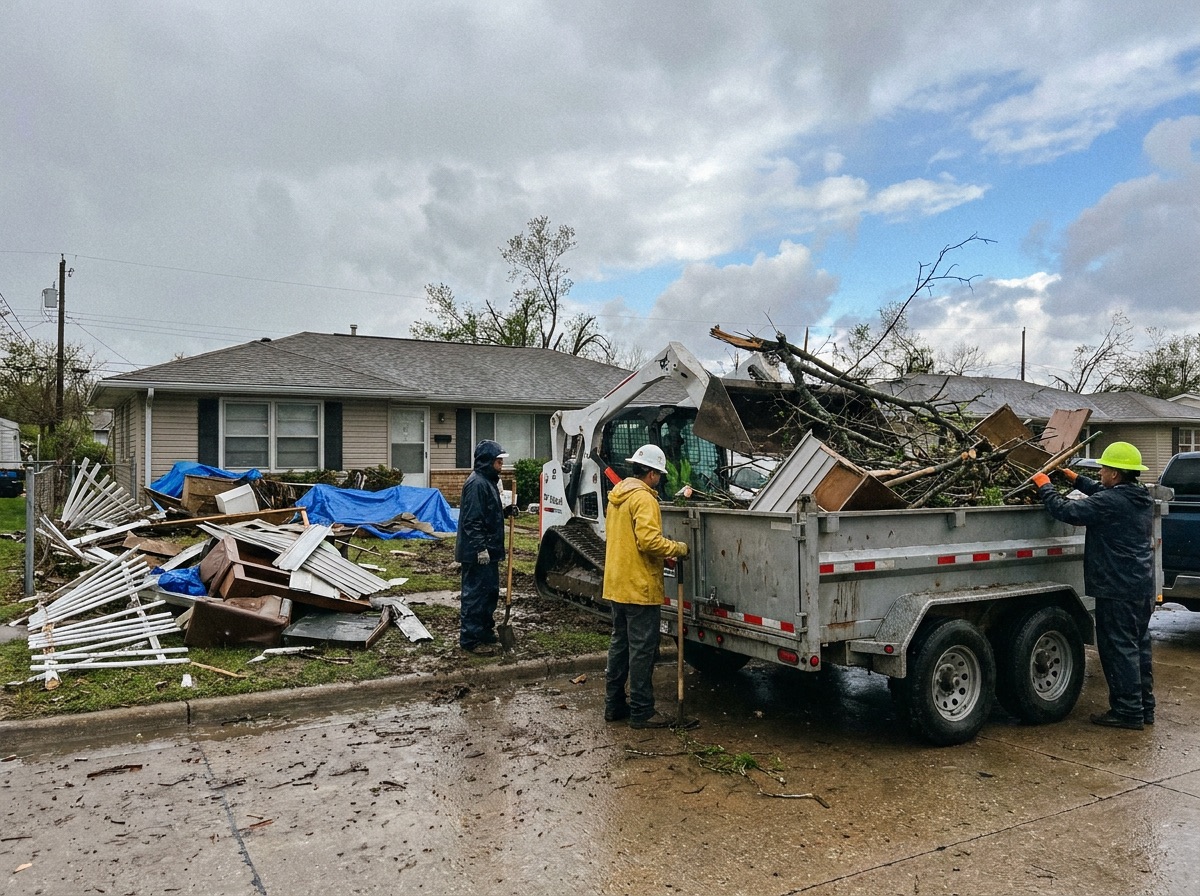
Storm debris hauling is the physical transport and licensed disposal of damaged materials generated by severe weather - shingles, insulation, siding, broken fencing, waterlogged drywall, and mixed structural waste. It differs from basic yard cleanup in that the debris typically comes from the structure itself and must be handled as construction and demolition waste, which carries specific disposal requirements at Florida and Illinois facilities. A trained crew loads materials into roll-off trucks or haul-away containers, transports them to approved transfer stations or landfills, and documents disposal for insurance and permitting purposes. Because FL and IL tipping fees vary by material type - lighter organic loads cost less than heavy masonry or shingle waste - the pricing model is driven by both volume in cubic yards and actual weight at the gate. After a named storm in Florida, contractor availability tightens within 24 hours, making prompt scheduling critical to avoiding extended delays.
When you need itSigns you need this service
- Storm stripped sections of roofing, siding, or soffit and the debris is piled on the property
- Damaged fencing, pool cages, or outbuildings collapsed and materials are scattered across the yard or driveway
- Interior water damage required emergency tearout of drywall, insulation, or flooring that now sits on-site
- A contractor completed emergency repairs and left behind a large volume of old materials with no disposal arranged
- Debris is blocking access to the home, garage, or electrical panels
- HOA or municipality has issued a notice requiring debris removal within a specified number of days
How it works
- Site assessment and load estimateA crew lead walks the property to categorize debris by type - organic, construction and demolition, hazardous, or mixed - and estimates cubic yardage. This determines whether a roll-off container, haul-away truck, or multiple loads are required, and sets the disposal route since different materials go to different facilities.
- Debris segregationMaterials are separated on-site before loading. Florida DEP and Illinois EPA both have rules for mixing recyclable C&D debris with general waste. Segregating concrete, metal, and wood from mixed refuse can reduce disposal fees and keep the job compliant.
- Loading and stagingCrew uses hand tools, forklifts, or loader equipment depending on debris size. Heavy or bulky items like collapsed trusses are staged for mechanical loading. Loose debris is raked and gathered to minimize residual scatter on the property.
- Transport to licensed facilityDebris is hauled to a permitted transfer station, C&D landfill, or material recovery facility. Florida counties operating under a FEMA debris management plan require contractors to use pre-approved disposal sites for potential reimbursement eligibility.
- Weight and volume documentationThe hauler receives a gate ticket at the disposal facility recording actual weight and material type. This ticket is important documentation for insurance claims and any potential FEMA or local government debris reimbursement programs.
- Final site sweep and sign-offCrew performs a final walkthrough to collect remaining loose materials, clear drain areas, and confirm the property is free of debris before the job is closed out. A completion record is provided to the homeowner.
What it costs
Pricing is driven by three variables: volume (cubic yards loaded), weight at the disposal gate (tipping fees ran roughly $62-$110 per ton nationally in 2024, with Florida coastal markets at the higher end), and material density - a truck of shingles weighs far more than the same volume of wood framing and triggers higher disposal fees. After a major storm, surge pricing from high contractor demand is common in both Florida and Illinois. Expect $300-$600 for a partial truckload of lighter mixed debris, $600-$1,200 for a full load, and $1,500 or more for multiple loads or heavy masonry-heavy debris.
Debris Hauling in Tampa: questions
Do you offer debris hauling in Tampa?
Yes. We connect Tampa homeowners with vetted, licensed local pros for storm debris hauling, with a free assessment and no obligation.
How fast can someone help with debris hauling in Tampa?
For Tampa and the surrounding Hillsborough County area, our network pros prioritize storm work and typically respond same-day or next-day for urgent needs.
How is storm debris hauling different from regular junk removal?
Standard junk removal companies handle household items and furniture. Storm debris hauling deals with construction and demolition material - damaged roofing, framing, insulation, siding - that often requires transport to a licensed C&D facility rather than a general municipal landfill. The weight, density, and disposal rules differ, which is why haulers who specialize in storm work are better equipped to handle it efficiently and compliantly.
Does my homeowner's insurance cover debris hauling costs?
Many standard homeowner policies include a debris removal provision, typically covering reasonable costs to remove debris from insured property when the debris results from a covered peril like wind or hail. The coverage amount is often a percentage of the dwelling coverage or a stated sublimit. Keep the disposal facility gate ticket and the contractor's invoice - these are the documents your insurer will want to see. Review your specific policy language rather than assuming coverage applies.
How quickly can a hauler get on-site after a storm in Florida?
In normal conditions, same-day or next-day service is available in most Florida metro areas. After a major hurricane or widespread storm event, demand spikes within hours and wait times can stretch to several days as hauling crews are overwhelmed. Scheduling early - even before the storm fully passes - is the most effective way to secure faster service. In Illinois, post-storm response times are generally faster because storm intensity is lower and demand peaks are smaller.
What is a roll-off container and do I need one for storm debris?
A roll-off is an open-top steel container - typically 10, 20, 30, or 40 cubic yards - that is delivered to your property, filled over time, and then hauled away. They work well when debris removal is happening over multiple days or when a contractor is doing ongoing tearout. For a single-event debris haul where a crew comes in and clears everything at once, a standard haul-away truck is more common. The right choice depends on job size and timeline.
Are there restrictions on where a roll-off container can be placed in Florida or Illinois?
Placement on private property generally requires no permit. Placement on a public street, sidewalk, or right-of-way typically requires a permit from the municipality, which the hauler can often pull on your behalf. In Florida, some HOAs and deed-restricted communities have rules about container placement duration and location. In Illinois, Chicago and larger suburbs have specific dumpster permit requirements with associated fees.
What debris types cannot go in a standard haul-away truck?
Hazardous materials - asbestos-containing materials found in older homes, lead paint, chemical containers, fuel tanks, and certain treated lumber - cannot be mixed with standard C&D debris. Refrigerants must be removed from appliances before disposal. In Florida, electronics and certain batteries are also restricted from landfills. A reputable storm hauler will flag these materials during the site assessment and direct you to the appropriate licensed handler.
How do I get an accurate price estimate before the crew arrives?
The most reliable method is a photo or video walkaround of all debris piles sent to the hauler before scheduling. Include something for scale - a door, a person, a vehicle - next to each pile. Describe the material types: shingles, wood, drywall, mixed. This allows the hauler to estimate cubic yardage and flag any heavy-density materials that affect the tipping fee. Phone quotes without photos tend to be rough estimates that adjust on-site.
What happens to the debris after it leaves my property?
C&D debris is typically processed at a licensed transfer station where recyclable materials - metal, clean wood, concrete - are sorted out. Recoverable metals are sent to scrap facilities. Clean wood may go to a biomass processor. The remaining mixed waste goes to a permitted C&D landfill. Florida DEP regulates C&D disposal facilities; Illinois EPA oversees equivalent facilities in that state. Responsible haulers will provide the disposal facility name and address if asked.
Can storm debris be placed at the curb for municipal pickup in Florida?
Many Florida municipalities activate a free curbside storm debris collection program after a declared disaster, typically for vegetative debris like branches and yard waste. Structural debris - shingles, insulation, siding, drywall - generally does not qualify for municipal curbside pickup and must be handled by a private hauler. Rules vary by county and by the severity of the storm declaration. Check your county's official emergency management page after any major storm event for current collection guidelines.
How many truckloads will my cleanup require?
A standard haul-away truck holds roughly 10-15 cubic yards of loose debris. A typical residential pile of storm debris from roof damage - say, a square of shingles, some underlayment, and assorted trim - fits in one to two loads. A full roof replacement plus damaged siding and interior tearout could generate four to six loads. Debris from collapsed structures, pool cages, or large fencing runs can fill significantly more. The on-site estimate from the crew lead is your best indicator once they see the actual volume.